The Importance of In-Service Education for Teachers in India
NEP 2020, CBSE & 21st-Century Classrooms
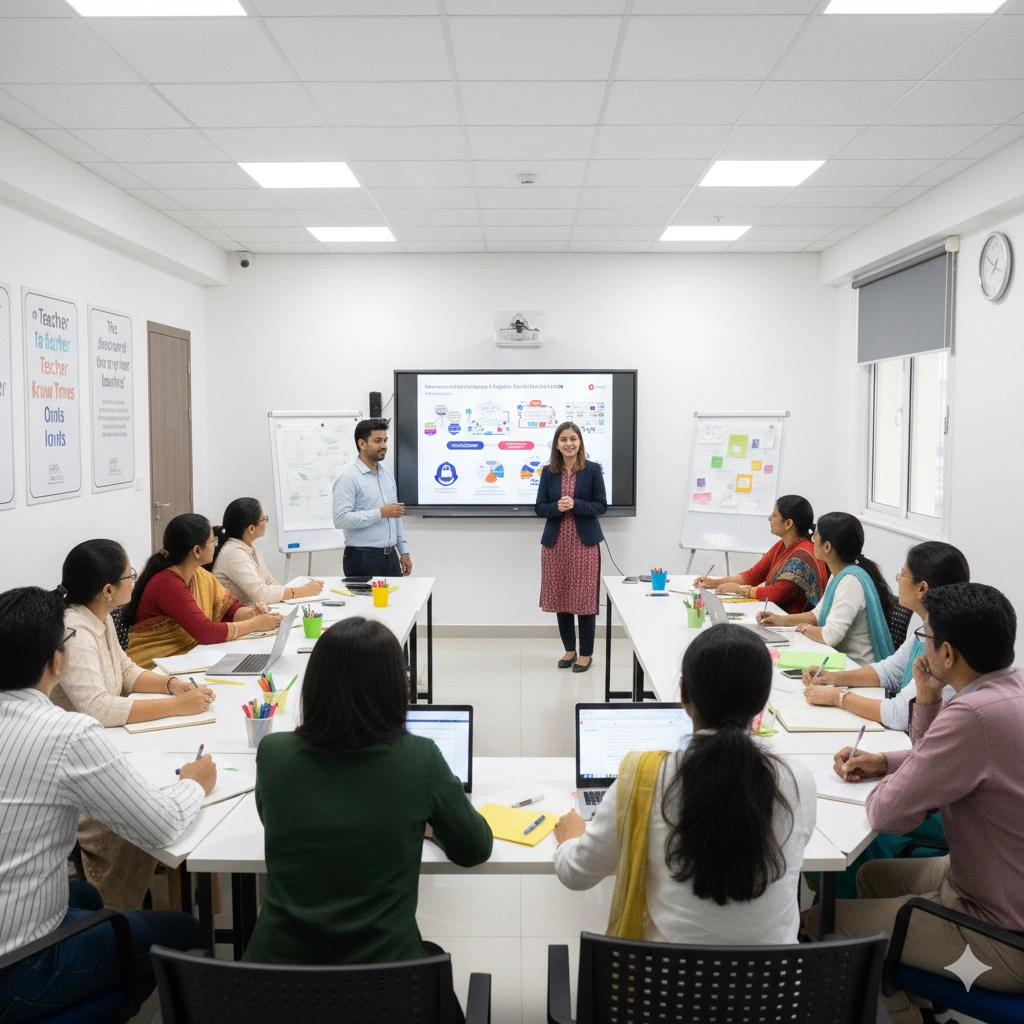
In-service education includes workshops, CBSE training programs, NISHTHA modules, online teacher training courses, refresher courses, and pedagogical seminars that help teachers stay current, confident, and classroom-ready.
"Education is the manifestation of perfection already in man."
— Swami VivekanandaFor teachers, in-service education is the process of uncovering that perfection, so they can bring out the best in every child they teach.
1. Staying in Sync with CBSE Rules and NEP 2020
Today, a teacher's role goes far beyond "finishing the syllabus." They are expected to:
Key Expectations
- Implement key recommendations of NEP 2020
- Follow the latest CBSE circulars and guidelines
- Adopt competency-based education and experiential learning
- Align with updates in the National Curriculum Framework (NCF)
CBSE and other boards now mandate regular in-service training and Continuous Professional Development (CPD) hours so that teachers:
- Understand new assessment patterns and exam reforms
- Learn student-centric teaching strategies
- Integrate technology and digital content into lessons
For example, a mathematics teacher who attends a CBSE workshop on digital pedagogy can start using interactive simulations, online quizzes, and visual apps. The result is better engagement, fewer "I don't understand" moments, and deeper conceptual clarity.
2. Upgrading Pedagogy for Modern Learners
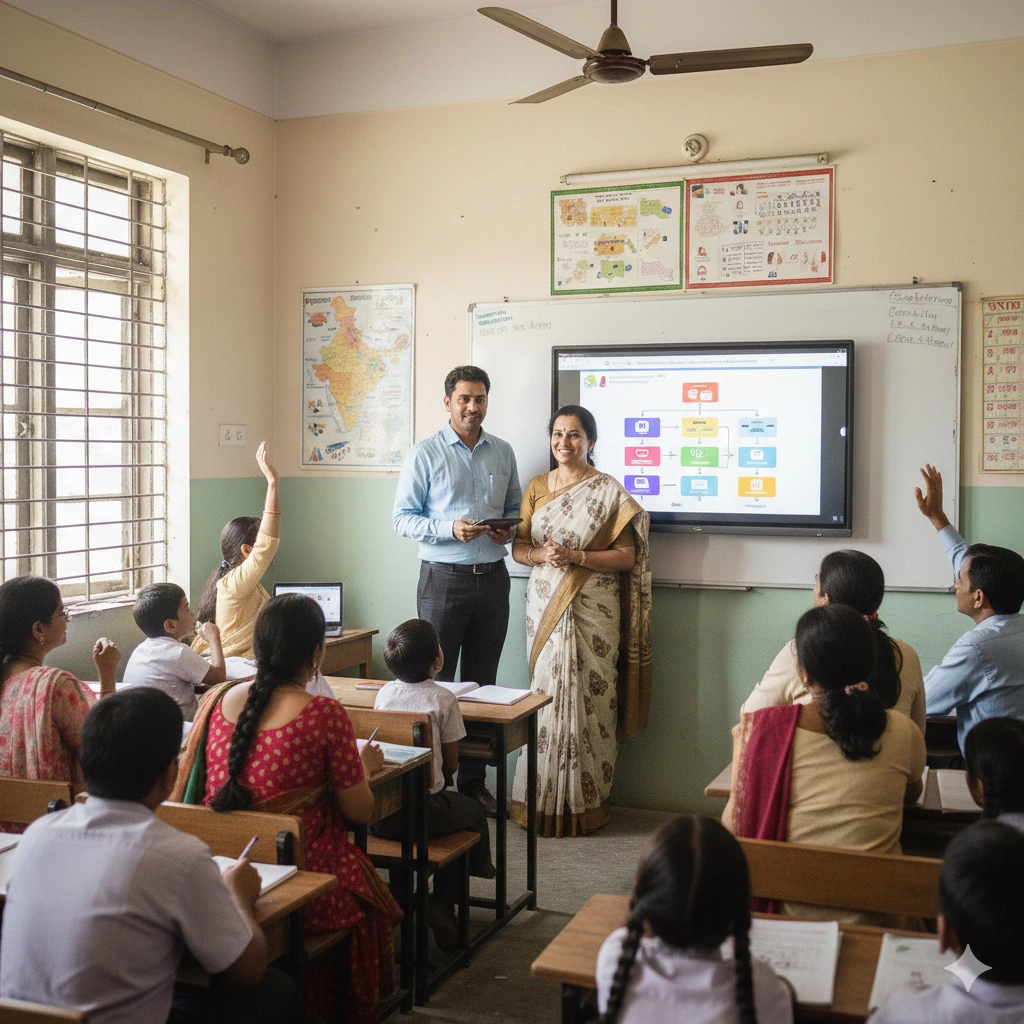
Modern teaching requires modern training
Today's students are curious, connected, and tech-savvy. A purely lecture-based, chalk-and-talk approach cannot meet their needs. In-service education helps teachers shift from one-way teaching to interactive, student-centered learning.
Through structured training, teachers learn to:
- Use activity-based and experiential learning in every subject
- Plan group work, projects, and peer learning
- Ask higher-order "why" and "how" questions instead of only "what"
- Blend offline and online resources effectively
"The greatest sign of success for a teacher is to be able to say, 'The children are now working as if I did not exist.'"
— Maria MontessoriWell-designed in-service training helps teachers create exactly this kind of classroom—where students think, explore, and take ownership of their learning, while the teacher becomes a skilled facilitator.
3. Strengthening Subject Knowledge and Interdisciplinary Teaching
Curricula across CBSE, ICSE, and state boards are being updated to include:
New Curriculum Areas
- Environmental education and climate change
- Financial literacy and life skills
- Coding and computational thinking
- Civics, citizenship, and constitutional values
In-service education gives teachers the opportunity to:
- Refresh and deepen their subject knowledge
- Understand new units, themes, and competencies added to the syllabus
- Explore interdisciplinary links, like connecting science to environment, maths to real-life decision-making, or social science to current affairs
Plato rightly said, "The direction in which education starts a man will determine his future in life." A teacher who is up to date, confident in content, and able to connect concepts across subjects is far better equipped to set students on the right future path.
4. Growing Personally and Professionally as a Teacher
In-service education is not just about better lessons; it is also about a better you as a teacher.
Personal & Professional Benefits
- Gain confidence and clarity in their role
- Learn modern classroom management techniques
- Handle behavioural issues and conflicts calmly
- Understand and support students with diverse learning needs
- Reconnect with the purpose and passion behind teaching
Swami Vivekananda's advice, "Take up one idea. Make that one idea your life—think of it, dream of it, live on that idea," fits perfectly here. In-service education often gives teachers that "one idea" or breakthrough strategy that transforms how they teach—and how they feel about teaching.
5. Making Student-Centered and Competency-Based Learning a Reality
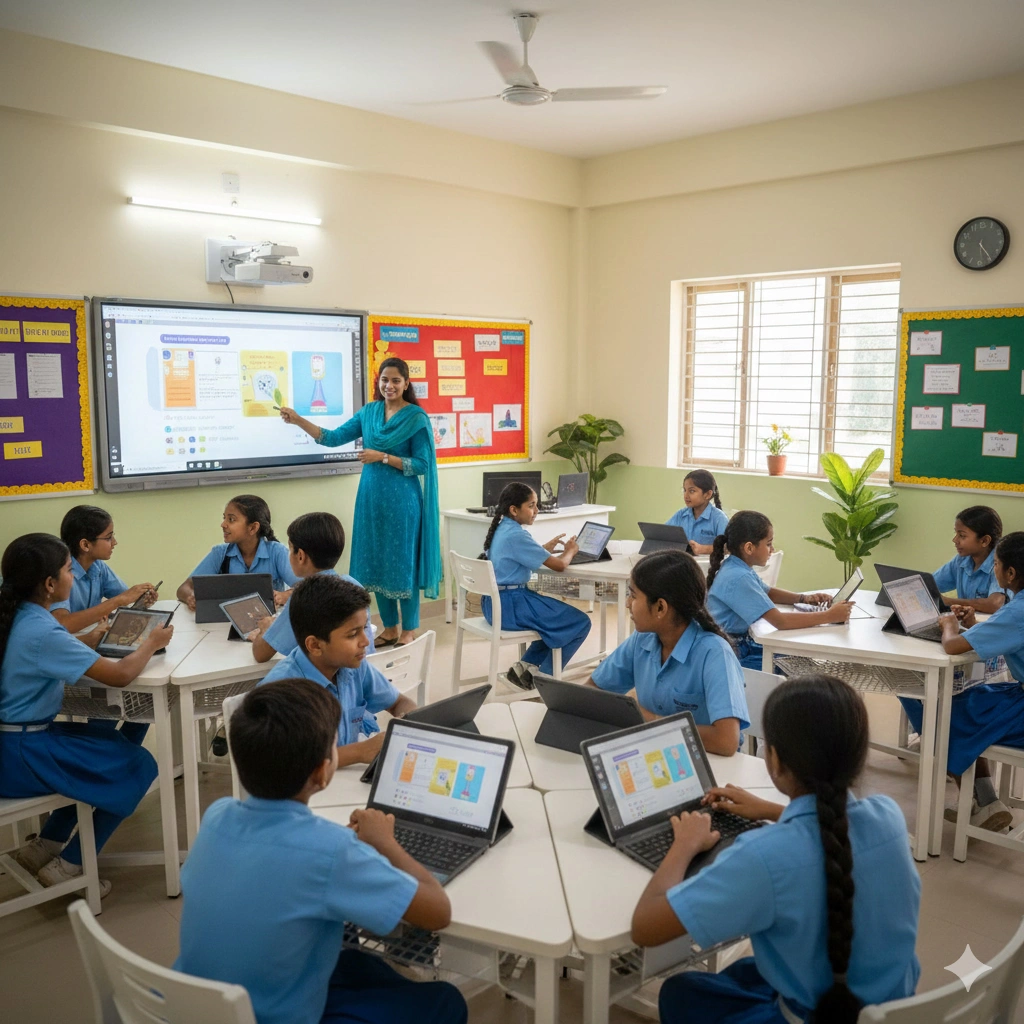
From teacher-centered to student-centered classrooms
Both CBSE and NEP 2020 stress that classrooms must become:
- Student-centered, not teacher-centered
- Focused on skills and competencies, not just rote memory
- Driven by critical thinking, creativity, and problem-solving
In-service education trains teachers to:
Practical Strategies
- Move from "I explain, you listen" to "Let's explore this together"
- Use assessment for learning—ongoing feedback, rubrics, and reflective tasks
- Design activities that allow students to apply concepts in real-life contexts
- Adapt their teaching to different learning styles and levels in the same class
Maria Montessori's philosophy of nurturing independence and self-discipline comes alive when trained teachers create spaces where students ask questions, try, fail, try again, and slowly build confidence in themselves and their thinking.
6. Understanding Key Indian Teacher Training Initiatives
In-service education is strongly supported by national and board-level initiatives such as:
Major Training Programs
- NISHTHA (National Initiative for School Heads' and Teachers' Holistic Advancement): Focuses on foundational literacy and numeracy, inclusive education, and effective classroom processes.
- CBSE Continuous Professional Development (CPD): CBSE expects teachers to complete a defined number of training hours every year through recognized training centres or online modules.
- NEP 2020 Teacher Development Provisions: Encourage regular CPD, digital upskilling, and competency-based training for all teachers.
These initiatives ensure teachers are not left to "figure it out alone" but are supported with structured, ongoing training pathways that keep them relevant and effective.
7. Adapting to Technology and 21st-Century Skills
The 21st century demands that students graduate with:
- Digital literacy and safe online practices
- Critical thinking and analytical skills
- Communication, collaboration, and creativity
- Adaptability in a changing world
Teachers cannot cultivate these skills if they themselves are uncomfortable with technology or unfamiliar with new-age learning tools. In-service training helps teachers:
Digital Transformation
- Use smart boards, learning apps, and LMS platforms
- Design blended learning experiences (online + offline)
- Guide students in researching, questioning, and verifying information
- Model lifelong learning in front of their students
Plato's focus on knowledge and reasoning becomes highly relevant in a digital world overflowing with information. An in-service trained teacher is better positioned to help students think clearly amidst the noise.
Final Thought: Training Teachers is Training the Nation
In-service education for teachers in India is not an optional extra; it is a foundation for quality education. It:
- Keeps teachers aligned with CBSE rules and NEP 2020
- Brings modern pedagogy and technology into classrooms
- Strengthens subject expertise and interdisciplinary thinking
- Supports teachers' personal and professional growth
- Creates student-centered, future-ready learning environments
When teachers keep learning, classrooms keep improving—and students keep growing. Swami Vivekananda's words, "Education is the manifestation of perfection already in man," remind us that the more we invest in teacher learning, the more that hidden perfection can shine through in every child.
If you are a school leader or teacher, in-service education is not just about attending a mandatory workshop—it is about choosing to grow so your students can grow with you.