The Role of a Principal in a School: 7 Pillars of Education in India
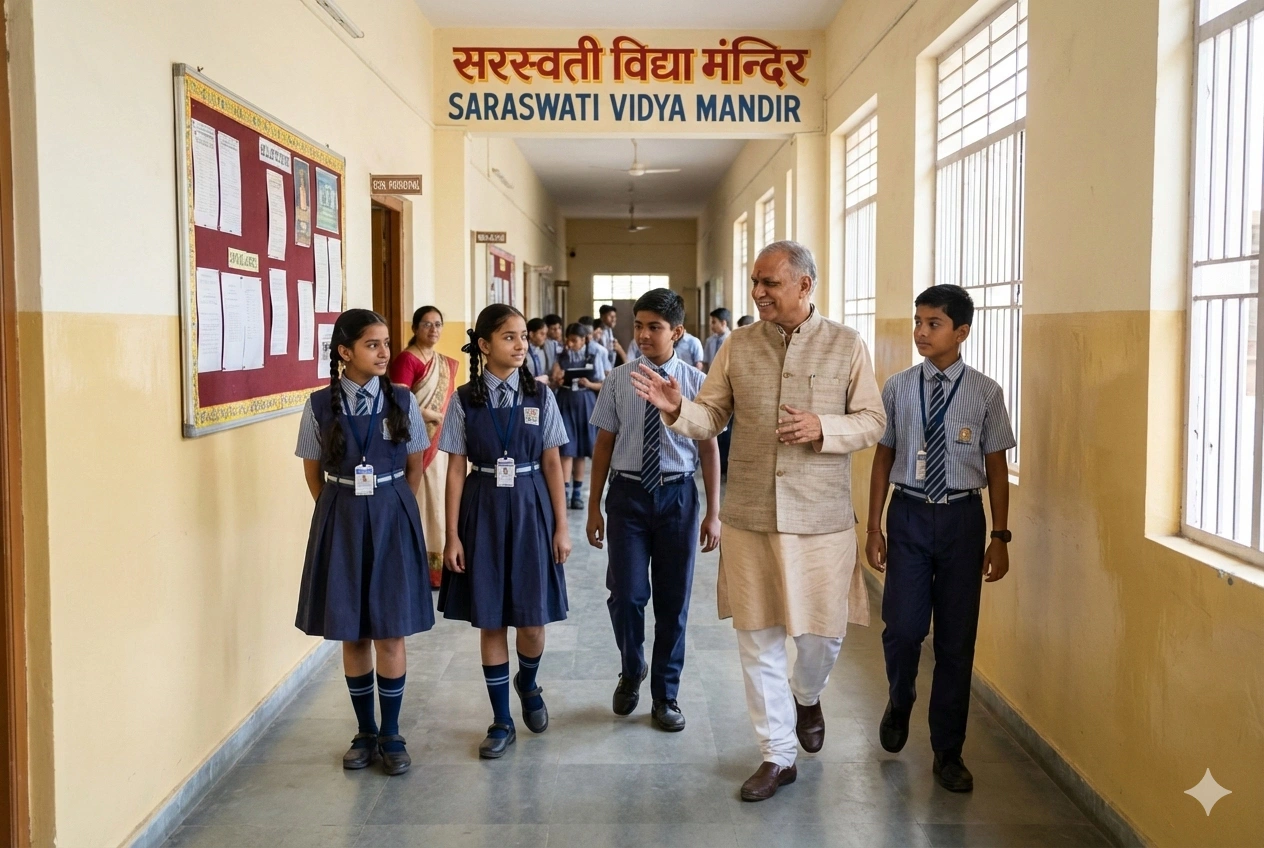
In the Indian context, where education is viewed as a tool for nation-building, the principal plays a pivotal role. They are the bridge between policy and practice, shaping not just academic success but the moral fiber of the next generation.
“Education is the manifestation of perfection already in man.”
— Swami VivekanandaIt is the principal’s duty to ensure this perfection is realized in every child. Here are the 7 core pillars that define the role of a modern school principal in India.
1. Visionary Leadership: Setting the Course
A school cannot function effectively as a mere collection of classrooms; it requires a coherent vision. The principal is the "Chief Visionary Officer." In India, principals are expected to align the school’s daily activities with broader national educational goals and societal values.
Mahatma Gandhi believed in education as a means of character-building, asserting, “By education, I mean an all-round drawing out of the best in child and man—body, mind, and spirit.”
Key Responsibilities
- Strategic Planning: Designing roadmaps that balance academic rigor with holistic growth.
- Culture Building: Creating an environment where intellectual, emotional, and ethical development thrives.
- Inspiration: Acting as a catalyst who inspires teachers, students, and parents toward a shared purpose.
2. Academic Leadership & Curriculum Management
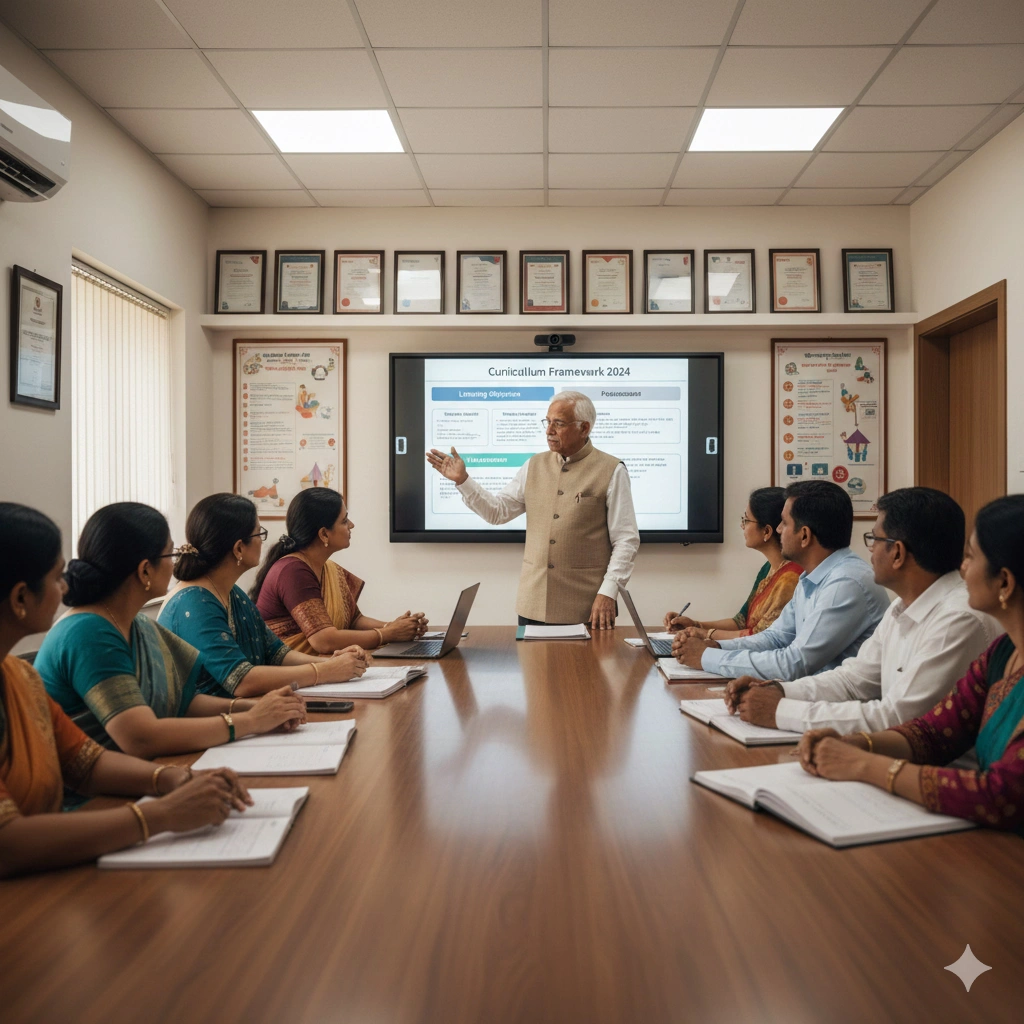
Ensuring academic excellence through curriculum oversight
The principal is arguably the most important academic figure in the school. With Indian schools following diverse boards like CBSE, ICSE, and State Boards, the principal must balance standardized requirements with local educational needs.
Maria Montessori famously said, “The greatest sign of success for a teacher is to be able to say, ‘The children are now working as if I did not exist.’” A good principal empowers teachers to adopt this child-centered philosophy.
Impact on Learning
- Pedagogical Innovation: Introducing modern teaching tools and digital learning resources.
- Curriculum Oversight: Ensuring learning outcomes are met effectively.
- Evaluation: Regularly auditing teaching methodologies to maintain high educational standards.
3. Implementing NEP 2020 and Policy Administration
A significant part of a principal’s role has always been administrative, but under the National Education Policy (NEP) 2020, this has evolved into "Pedagogical Leadership." Principals are no longer just managers; they are the frontline warriors tasked with transforming policy into classroom practice.
Prime Minister Narendra Modi has highlighted that “Education is the foundation for India’s development, and school leadership is critical in making this foundation strong.”
In 2026, a principal’s administrative success is measured by how effectively they transition the school from the old rote-learning model to the new 5+3+3+4 pedagogical structure. Their administrative acumen ensures the school remains compliant while fostering an environment of innovation.
Key NEP 2020 Compliance Mandates
- Adopting the 5+3+3+4 Structure: Realigning grades into Foundational, Preparatory, Middle, and Secondary stages to ensure age-appropriate learning.
- Holistic Progress Cards (HPC): Replacing traditional report cards with 360-degree assessments that track learner progress in cognitive, affective, and psychomotor domains, as per PARAKH guidelines.
- Achieving FLN Goals: Actively monitoring the NIPUN Bharat mission targets to ensure every child attains Foundational Literacy and Numeracy by Grade 3.
- Vocational Integration: Ensuring strict compliance with the mandate to introduce skill-based education and vocational exposure from Grade 6 onwards (e.g., coding, pottery, carpentry).
- SQAA Framework: Aligning school processes with the School Quality Assessment and Assurance (SQAA) standards to ensure the school is "accreditation-ready" at all times.
4. Mentoring Teachers: The "Principal as Coach"
The quality of a school encompasses the quality of its teachers. Principals serve as the primary mentors for their staff. By fostering Continuous Professional Development (CPD), principals directly impact classroom quality.
Swami Vivekananda stressed, “The teacher is the creator of the human mind.” By mentoring these creators, principals shape the destiny of the nation.
How Principals Empower Teachers
- Providing constructive feedback on lesson plans.
- Encouraging innovation and risk-taking in teaching methods.
- Organizing workshops for skill upgradation, ensuring compliance with the mandatory 50 hours of CPD per year.
5. Student Welfare, Discipline, and Inclusivity
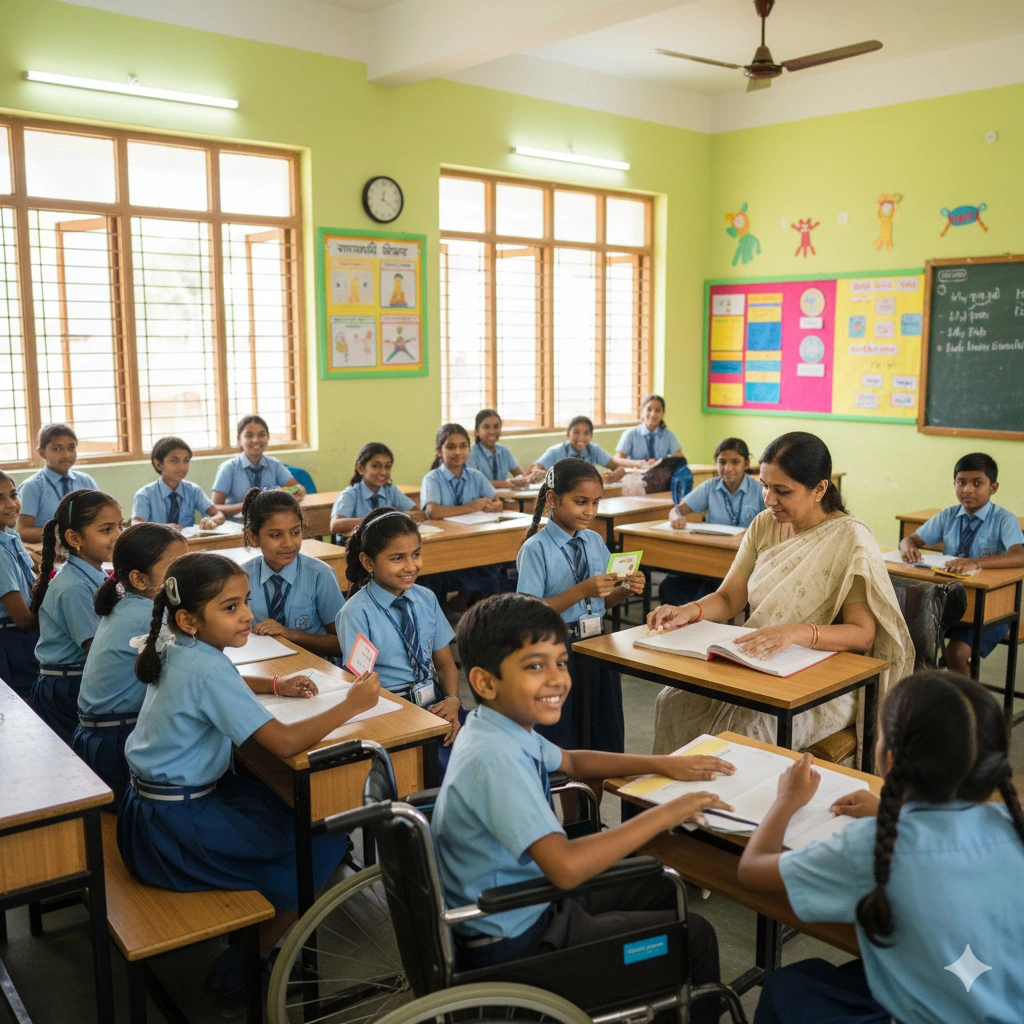
A principal is the custodian of student welfare. In India, where schools cater to diverse socio-economic backgrounds, promoting inclusivity is non-negotiable.
Mahatma Gandhi believed discipline should stem from self-control, not fear. Modern principals embody this by shifting from punitive measures to restorative justice and Social-Emotional Learning (SEL).
Focus Areas:
- Safety & Security: Ensuring a physically and psychologically safe campus.
- Conflict Resolution: Mediating issues with sensitivity.
- Values Education: Fostering honesty, integrity, and empathy among students.
6. Community Engagement and Parent Relations
Education does not stop at the school gates. Principals act as the bridge between the school and the wider community.
Maria Montessori noted that schools should reflect society. Proactive principals involve parents, local organizations, and alumni in school development. In the Indian context, this often involves community outreach programs, environmental drives, and active Parent-Teacher Associations (PTAs).
7. Innovation and Technological Adaptability
The 21st-century Indian principal must be a tech-savvy leader. With the rapid rise of EdTech, principals must guide their schools through digital transformations without losing the human touch.
Prime Minister Modi has urged school leaders to embrace technology to equip students for the future. A principal who fosters a culture of research, coding, and problem-solving prepares students not just for board exams, but for life in a global economy.
Did You Know? (Quick Stats)
- Impact on Learning: Research suggests that effective school leadership accounts for up to 25% of the total school effect on student achievement.
- NEP Focus: The NEP 2020 explicitly requires school leaders to undergo 50 hours of Continuous Professional Development (CPD) annually to stay updated.
- Teacher Retention: Schools with supportive principals report significantly higher teacher retention rates, crucial for academic stability.
Conclusion
In India, a school principal is far more than an administrator; they are the visionary, mentor, and guide of the entire educational ecosystem. Through leadership in academics, teacher mentoring, and community engagement, they shape the future of the country.
As Swami Vivekananda, Mahatma Gandhi, Maria Montessori, and PM Modi have all illustrated through their philosophies, education requires a holistic approach. By recognizing and empowering principals, we ensure that Indian schools remain hubs of innovation, character-building, and social development.