Balancing Work and Parenting: A Practical Guide for Your Child's Growth

Here's what I want you to know: you're not alone, and more importantly, working parents can absolutely raise happy, healthy, and confident children. It's not about how many hours you spend with them—it's about what you do with the time you have.
Harvard Business School Study: Daughters of working mothers are more likely to be employed, hold supervisory responsibilities, and earn higher wages, while sons of working mothers spend more time caring for family members.
It turns out, your career is actually teaching them valuable life lessons. This isn't going to be one of those articles that tells you to wake up at 5 am or become a superhero. This is about real, doable changes that actually work for Indian families like yours.
Let Go of the Guilt First
The first thing most working parents need to hear is this: your child does not need you to be perfect. They need you to be present when you're with them. There's a huge difference between spending three distracted hours scrolling through your phone while sitting next to your child and spending twenty focused minutes where you're actually listening, talking, and connecting.
Key Insight from Research
Research published in the Journal of Marriage and Family found that the sheer amount of time mothers spend with their children between ages 3 and 11 has little to no impact on the child's academic or behavioral success. What matters is the quality of that time.
Stop comparing yourself to that mom on Instagram or your neighbor who doesn't work. Your situation is different, and that's okay. Working parents raise incredibly well-adjusted kids every single day.
Build a Routine That Works for Everyone

Consistency creates security and reduces daily stress
Kids thrive on predictability. When they know what to expect, they feel safe. And when they feel safe, they learn better, sleep better, and behave better. As a working parent, a solid routine is your best friend because it removes the need to make a hundred small decisions every day.
You don't need a minute-by-minute schedule, but you do need anchor points:
- Morning routine: Wake-up, breakfast, school prep
- After-school routine: Snack, homework, play time
- Evening routine: Dinner, family time, bedtime ritual
Research Finding
Children with regular bedtime routines perform significantly better in math, reading, and spatial skills, according to a study involving over 10,000 children. Consistent bedtimes help their brain anticipate patterns and reduce stress.
When your child knows that homework happens right after snack time, you're not fighting about it every evening. This reduces stress for both of you.
Create Small Rituals That Build Big Bonds
You might not have hours every day, but you definitely have moments. And honestly, moments are enough if you make them count. Some of the strongest parent-child relationships are built on tiny, repeated rituals:
Powerful Daily Rituals
- A two-minute hug when you get home from work (releases oxytocin, the bonding hormone)
- Asking three questions at dinner: What made you smile today? What was hard today? What are you looking forward to tomorrow?
- Reading one chapter together before bed, even if you're exhausted
American Psychological Association: Family rituals are linked to greater marital satisfaction, adolescents' sense of personal identity, and children's health, according to a review of 50 years of research.
These rituals don't take much time, but they send a powerful message: "You matter to me. I see you. I'm here for you." That's what builds emotional security.
Plan Your Week, Not Just Your Day
One of the biggest mistakes working parents make is living day to day without a plan. By Sunday night, if you haven't thought about the week ahead, you're already setting yourself up for chaos.
Try this: Spend 20 minutes on Sunday evening planning the week:
- Check the school calendar for tests, projects, or PTMs
- Plan meals roughly so you're not ordering takeout every night
- Lay out school uniforms for the week
- Create a simple family schedule noting who's doing what
This small habit reduces mental load, eliminates surprises, and helps you show up as a calmer, more organized parent. And kids notice that. When you're less stressed, they're less stressed.
Share the Load, Seriously
If you have a partner, you need to divide responsibilities clearly. Not just housework, but parenting tasks too. Who's handling the morning routine? Who's doing bedtime? Who's checking homework?
Reality Check
In India, women spend 299 minutes a day on unpaid domestic services, while men spend just 97 minutes (OECD data). This gap leads to burnout and affects both work performance and parenting quality.
Sit down with your partner and divide things fairly. And if you're doing it alone, don't hesitate to ask for help from grandparents, trusted neighbors, or friends.
Even involving your child in age-appropriate tasks helps:
- 6-year-old: Pack their own water bottle
- 9-year-old: Lay out their uniform the night before
- 11-year-old: Help a younger sibling with homework
These aren't burdens—they're life skills that foster independence and responsibility.
Handle Screen Time Before It Becomes a Problem
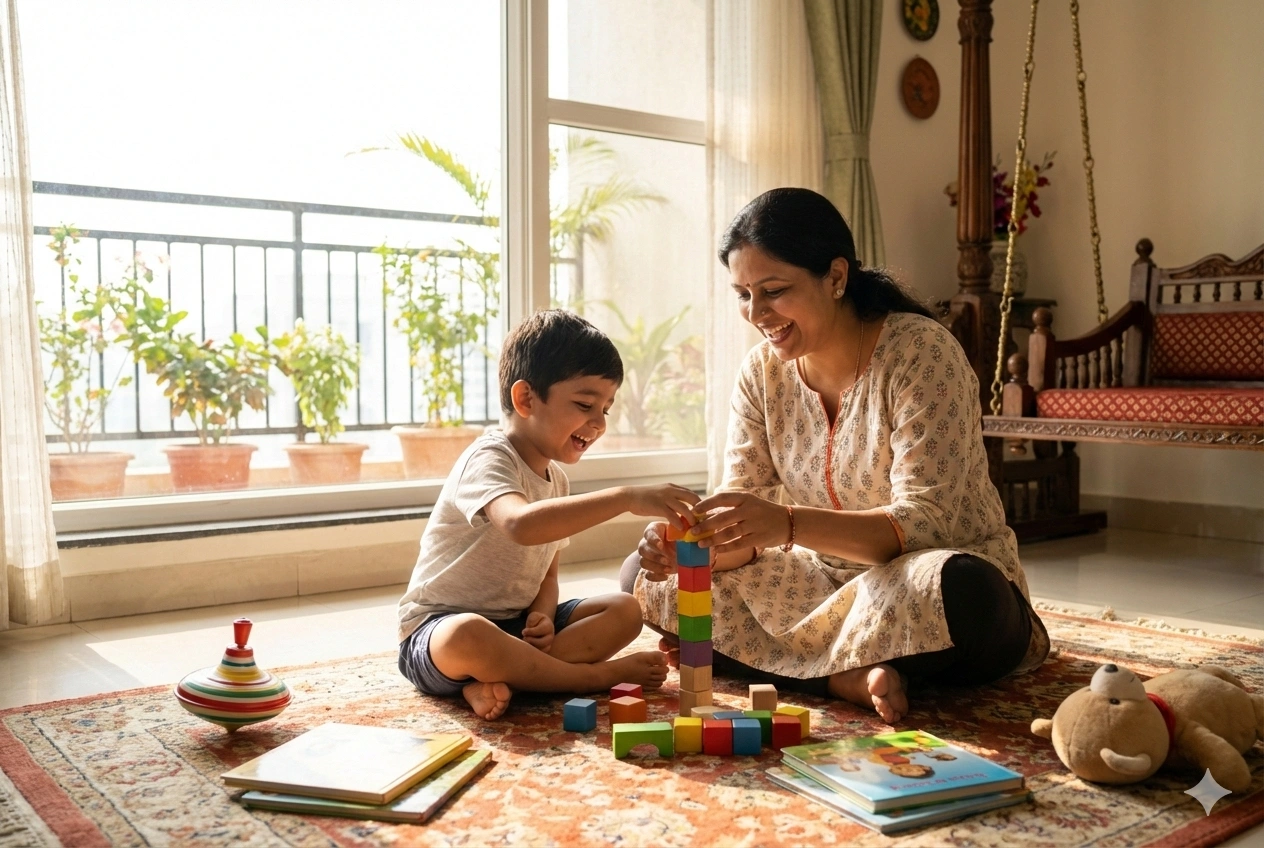
Quality interaction beats screen time every time
Let's talk about the elephant in the room: screens. With busy schedules, it's tempting to use screens as a babysitter. However, excessive screen time is linked to sleep issues and attention problems.
Expert Recommendation
The American Academy of Pediatrics recommends consistent limits on media use. For children aged 2 to 5, screen time should be limited to 1 hour per day of high-quality programs.
Set clear, simple rules and stick to them:
- Maybe it's 30 minutes after homework
- Maybe it's educational content only on weekdays
- Offer alternatives like coloring books, puzzles, or building blocks
Boredom is not a bad thing—it's where creativity begins. If you constantly rescue your child from boredom with a screen, you're robbing them of the chance to learn self-entertainment.
Focus on All-Round Growth, Not Just Grades
I know academic pressure is real, especially in Indian cities. But if your only focus is on marks and ranks, you're going to raise an anxious child who thinks their worth is tied to their report card.
Holistic Development Matters
- Physical Activity: WHO recommends at least 60 minutes of moderate-to-vigorous physical activity daily for children aged 5-17
- Emotional Health: Teach them to name their feelings. Say, "I can see you're upset. Do you want to talk about it?"
- Social Skills: Learning to share, handle frustration, and collaborate
Talk to them about their feelings. Model healthy emotional expression yourself. This is how you raise emotionally intelligent children who grow up to be well-adjusted adults.
Take Care of Yourself Too
Here's the thing nobody tells you enough: you cannot pour from an empty cup. If you're running on five hours of sleep, surviving on chai and biscuits, and constantly feeling guilty, you're not going to be the parent you want to be.
Self-care isn't selfish. It's necessary.
Simple Self-Care Ideas
- 10 minutes of quiet time with your tea
- A 15-minute walk after dinner
- Calling a friend once a week to vent and laugh
- Saying no to one extra responsibility you don't have to take on
When you're calmer, more rested, and less resentful, you have more patience. You handle tantrums better. You enjoy your child more. And your child benefits from that a hundred times over.
It's Okay to Not Be Perfect
Some days you'll engage in beautiful play, cook a nutritious meal, and handle every tantrum with grace. Other days, you'll lose your temper, forget an assignment, serve instant noodles, and feel like you're failing.
That's normal. That's life. Parenting is messy, and working while parenting is even messier.
Key Takeaway: Your child doesn't need perfect. They need real. They need someone who loves them, believes in them, and is doing their best even when life is hard. And honestly? You're already doing that.
So take a deep breath, give yourself some credit, and trust that you're enough.