Why Montessori Learning Matters More Than Ever
A Child-Centered Approach for the Modern World
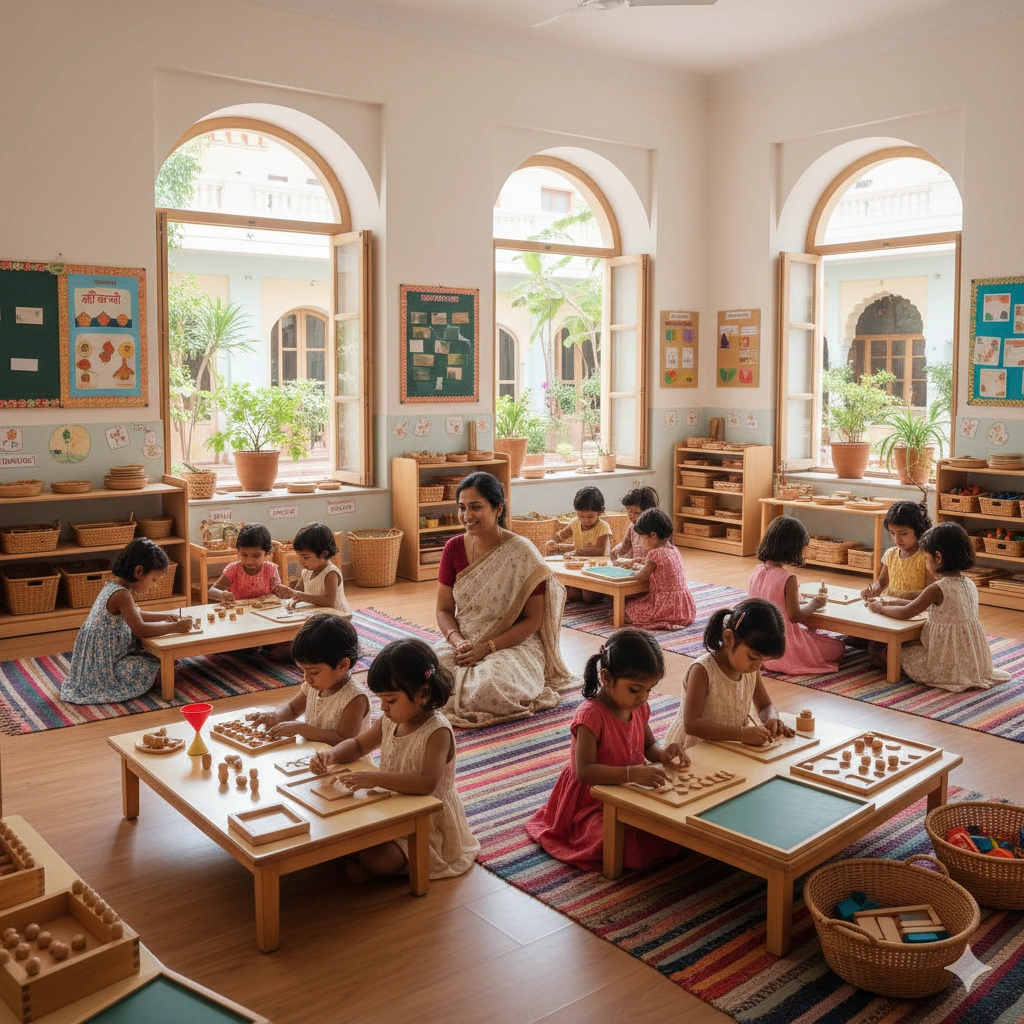
Even today, when parents are searching for the best preschool curriculum or comparing Montessori vs traditional education, this approach remains highly relevant because it nurtures critical thinking, creativity, emotional intelligence, and a genuine love for lifelong learning—qualities that rote-based systems often fail to cultivate.
Maria Montessori observed children closely and concluded that each child has a unique way of learning—an innate curiosity that should be nurtured rather than suppressed. She famously stated:
"The child is both a hope and a promise for mankind."
— Dr. Maria MontessoriIn a well-designed Montessori classroom or Montessori preschool, the environment is carefully prepared so that children can explore, experiment, and learn at their own pace. Instead of memorizing from textbooks, they work with concrete, self-correcting materials that make abstract concepts clear and meaningful. This approach not only strengthens academic foundations but also builds concentration, responsibility, and self-discipline from an early age.
1. Montessori and Modern Child Psychology
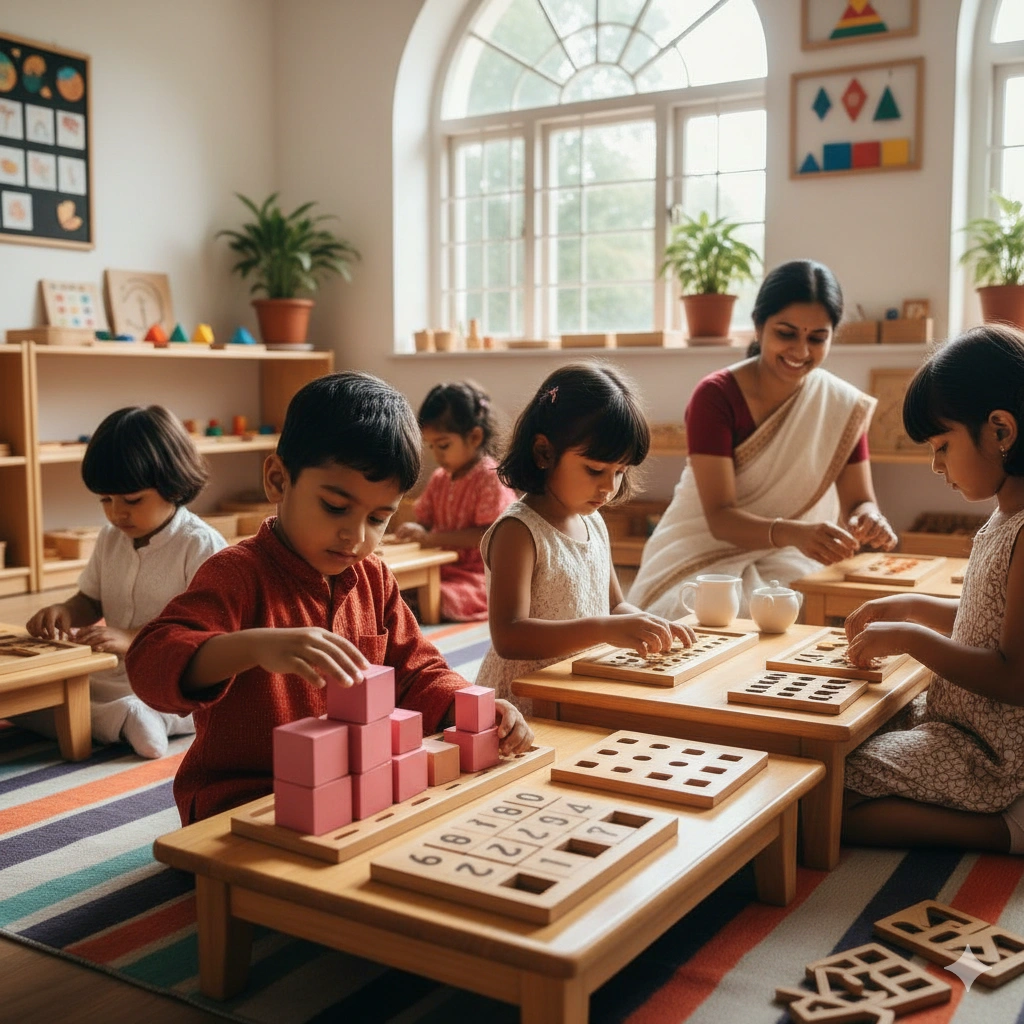
Montessori classrooms: Where children construct knowledge through hands-on exploration
What makes Montessori learning particularly relevant today is its strong alignment with modern research in child development and cognitive psychology.
Swiss psychologist Jean Piaget argued that children construct knowledge by interacting with their environment. His theories of cognitive development support Montessori's emphasis on experiential learning, discovery, and learning through play. In a Montessori school, children actively engage with materials instead of passively listening to lectures.
This Hands-On Learning Develops:
- Problem-solving skills through real-world challenges
- Creativity and curiosity by encouraging exploration
- Independence and self-confidence through self-directed activities
These are exactly the skills parents look for when they search for the best early childhood education method or future-ready school for my child.
Johann Heinrich Pestalozzi, another influential educational reformer, believed in educating the "head, heart, and hands" together—integrating intellectual, emotional, and practical skills. The Montessori method reflects this integrated approach. Children not only learn literacy and numeracy but also:
- Social and emotional skills through mixed-age interactions
- Practical life skills (pouring, cleaning, organizing, caring for plants)
- Cooperation, empathy, and respect for others
This makes them well-rounded individuals, not just exam-trained students.
2. Learning by Doing: Montessori and John Dewey
Maria Montessori's philosophy also complements the ideas of John Dewey, the American philosopher and educator who advocated "learning by doing." Dewey emphasized that education should be rooted in real-life experiences and problem-solving, not limited to textbooks and memorization.
Montessori Classrooms Are Living Examples
- Children handle real objects instead of only pictures
- Activities are purposeful and connected to real life
- Concepts like math, language, and science are learned through tangible experiences
This practical engagement nurtures critical thinking, creativity, and confidence—skills essential for navigating the uncertainties of the 21st century job market and real-life challenges.
3. Neuroscience and the Montessori Advantage
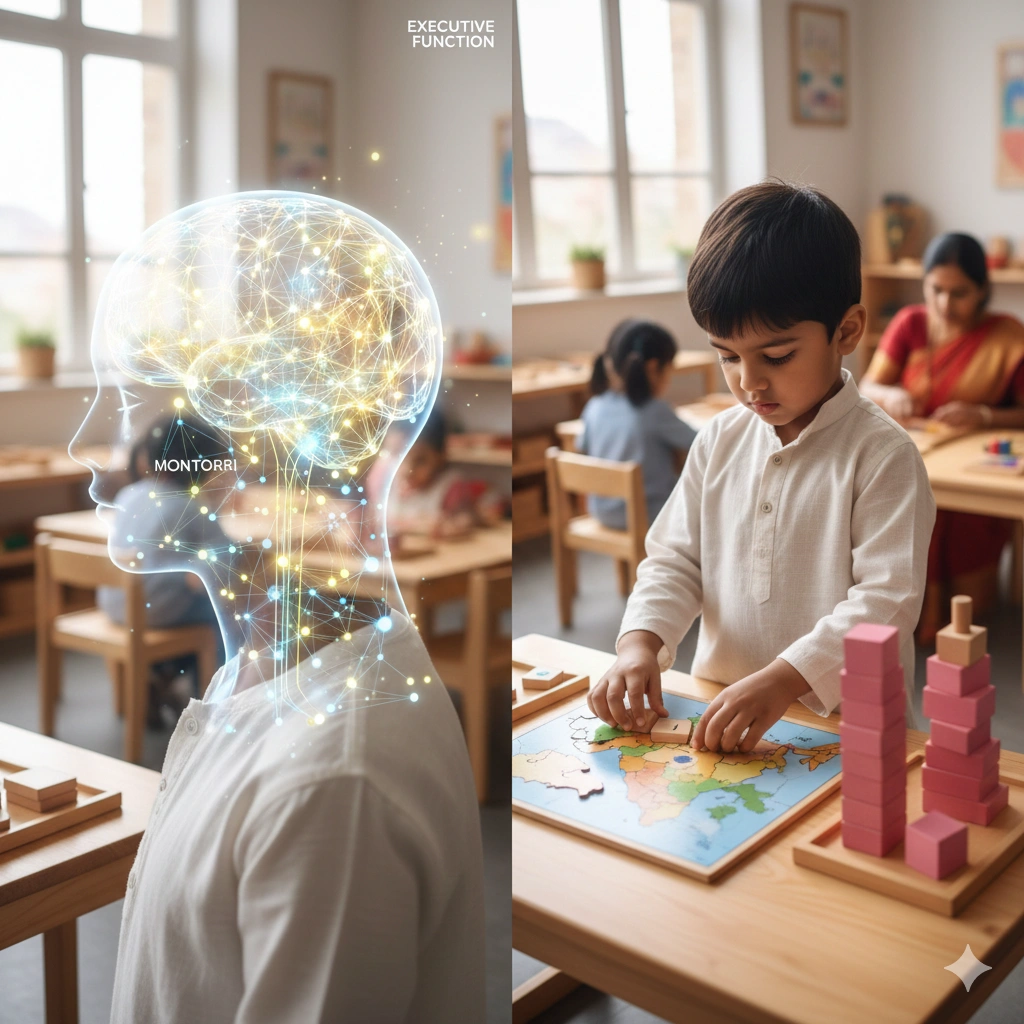
Early childhood: A critical period for brain development that Montessori optimizes
Modern neuroscience shows that early childhood is a critical period for brain development, especially for:
- Executive functions (planning, self-control, decision-making)
- Focus and attention span development
- Emotional regulation abilities
Brain Science Supports Montessori
A Montessori environment is ideal for strengthening these abilities because it encourages children to make choices, take responsibility, and work in long, uninterrupted periods that build deep concentration.
For parents comparing different preschool methods or searching "Is Montessori good for my child?", this brain-based alignment is a strong reason to consider the Montessori approach.
4. Emotional Intelligence and Social Skills in Montessori Education
In today's world, where anxiety, stress, and behavioral issues are increasingly common among students, the social-emotional learning built into Montessori education is more important than ever.
In a Montessori Setting, Children Learn To:
- Manage frustration and wait for their turn patiently
- Respect others' space, work, and feelings
- Work in mixed-age groups, naturally practicing leadership and empathy
These experiences build emotional intelligence, resilience, and interpersonal skills—traits strongly linked to long-term success, healthy relationships, and mental well-being. For parents searching how to build confidence in children or best school for social skills development, Montessori offers a natural, everyday framework.
5. Montessori, Peace Education, and Global Citizenship
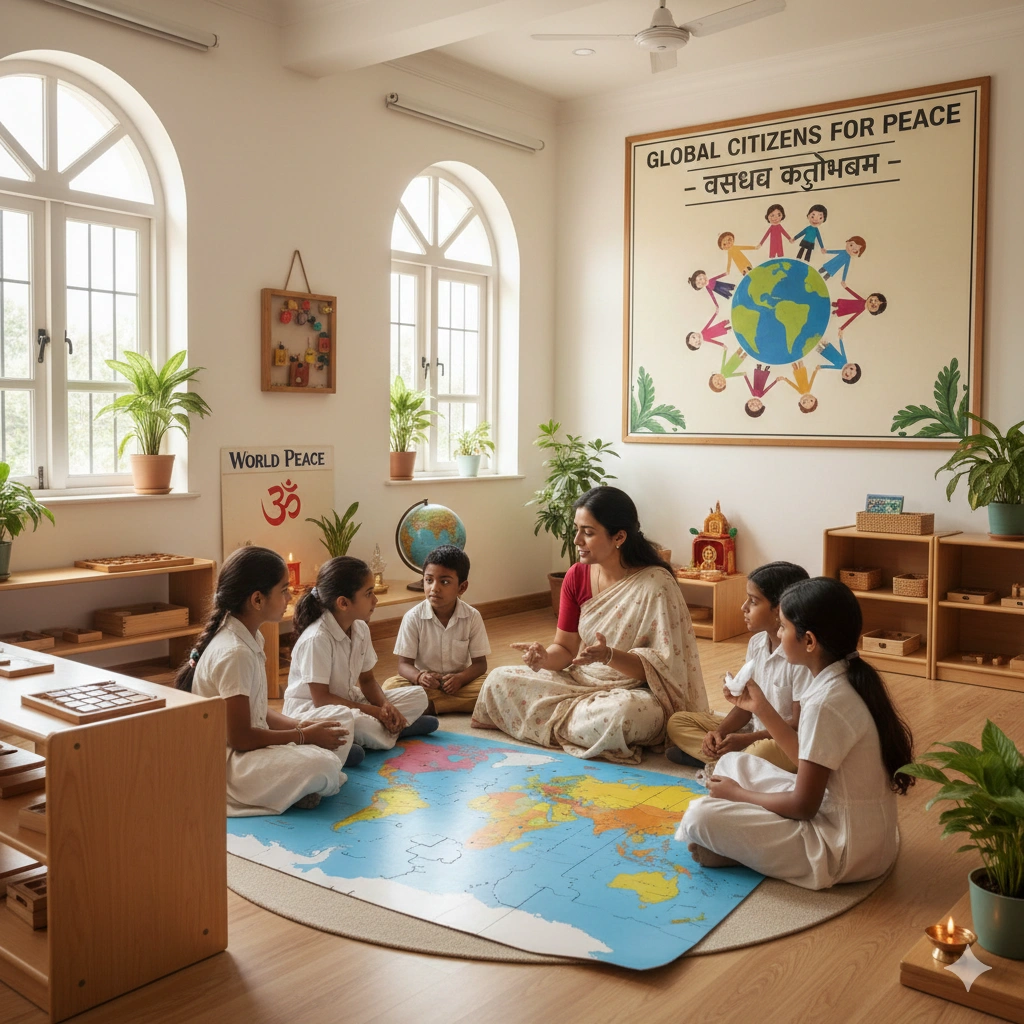
Montessori: Education as a tool for peace and global understanding
The Montessori approach also transcends cultural and geographical boundaries. Maria Montessori believed that education is a tool for peace. Her classrooms encourage:
- Respect for diversity and different cultures
- Cooperation instead of unhealthy competition
- Responsibility toward others and the environment
In an increasingly interconnected yet divided world, Montessori education helps children grow into empathetic, globally aware citizens—something parents deeply value when they look for progressive schools or values-based education.
6. Montessori and NEP 2020 in India
Governments and modern educational policies are increasingly recognizing the value of principles long practiced in Montessori settings. India's National Education Policy (NEP) 2020 emphasizes:
NEP 2020 Core Priorities
- Holistic, multidisciplinary learning
- Experiential and play-based learning in early childhood
- Child-centered pedagogy and inquiry-based learning
- Focus on emotional well-being, creativity, and critical thinking
These priorities are deeply aligned with Montessori philosophy, especially in the foundational years (3–8 years). For parents in India searching NEP 2020 preschool approach or Montessori school near me, this alignment reaffirms that the Montessori method is not outdated—it is strongly future-ready and policy-aligned.
7. Montessori vs Traditional Education: Does It Work in the Real World?
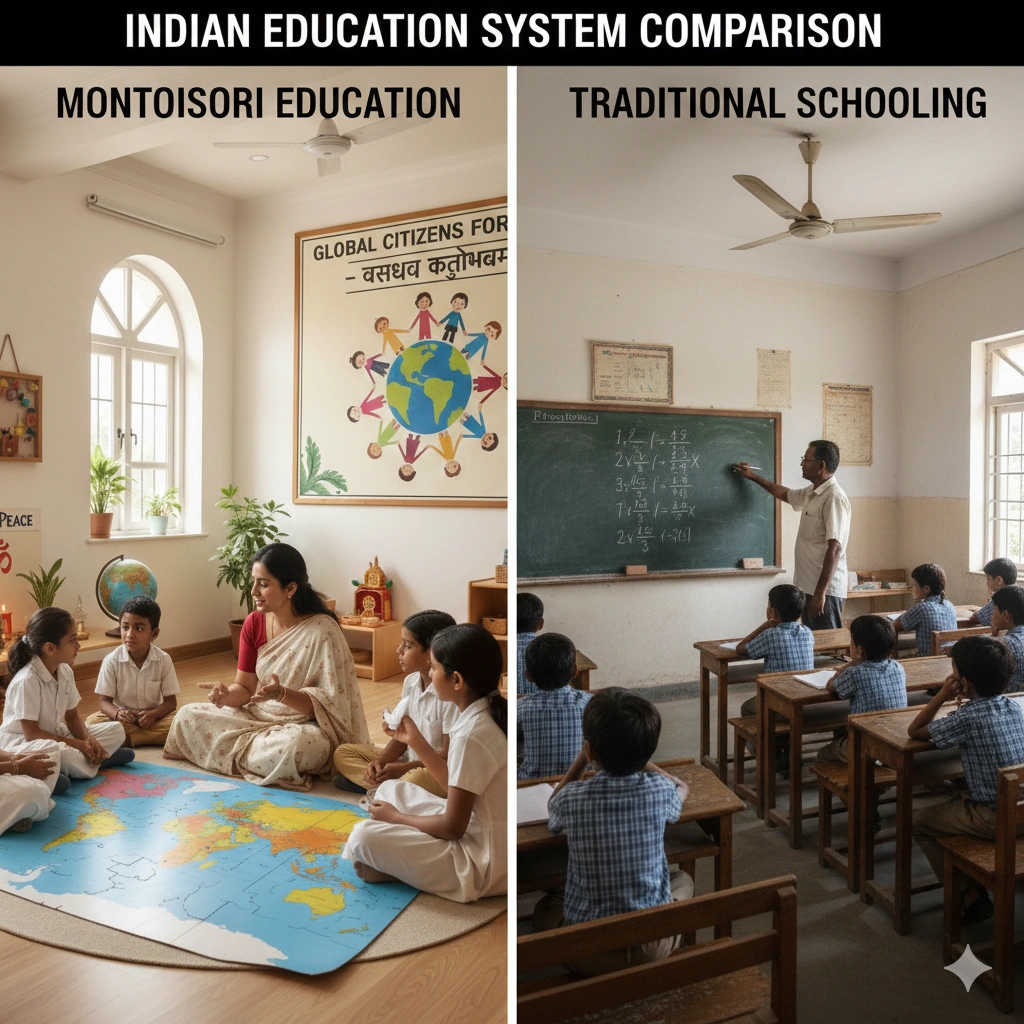
Research-backed evidence: Montessori students thrive academically and emotionally
A common concern is whether Montessori education can prepare children for traditional exams and competitive environments.
Research on Montessori vs Traditional Schooling
Studies have found that Montessori students often perform as well or better in core academic skills while showing stronger executive functioning, self-regulation, creativity, and intrinsic motivation compared to traditional schooling.
In other words, Montessori does not ignore academics; it builds a solid conceptual foundation and love for learning first, which later makes exam preparation smoother and less stressful. The result is not just high scorers, but independent, adaptable, and confident learners.
Conclusion: A Timeless Method for a Changing World
Montessori learning matters more than ever because it:
- Prioritizes the holistic development of the child
- Nurtures intrinsic motivation and curiosity
- Builds essential cognitive, social, and emotional skills
- Aligns with the ideas of Piaget, Pestalozzi, Dewey, and modern frameworks like NEP 2020
By focusing on hands-on learning, independence, and the innate potential of every child, Montessori education equips learners not only to excel academically but also to thrive as compassionate, innovative, and resilient human beings.
In an age where rote memorization and exam pressure still dominate many classrooms, Montessori reminds us that true education is about cultivating the mind, heart, and character—a promise just as vital today as it was over a century ago.