Why the Mid-Day Meal Programme (PM POSHAN) is India's Game-Changer
Rules, Benefits & Impact of the World's Largest School Feeding Programme
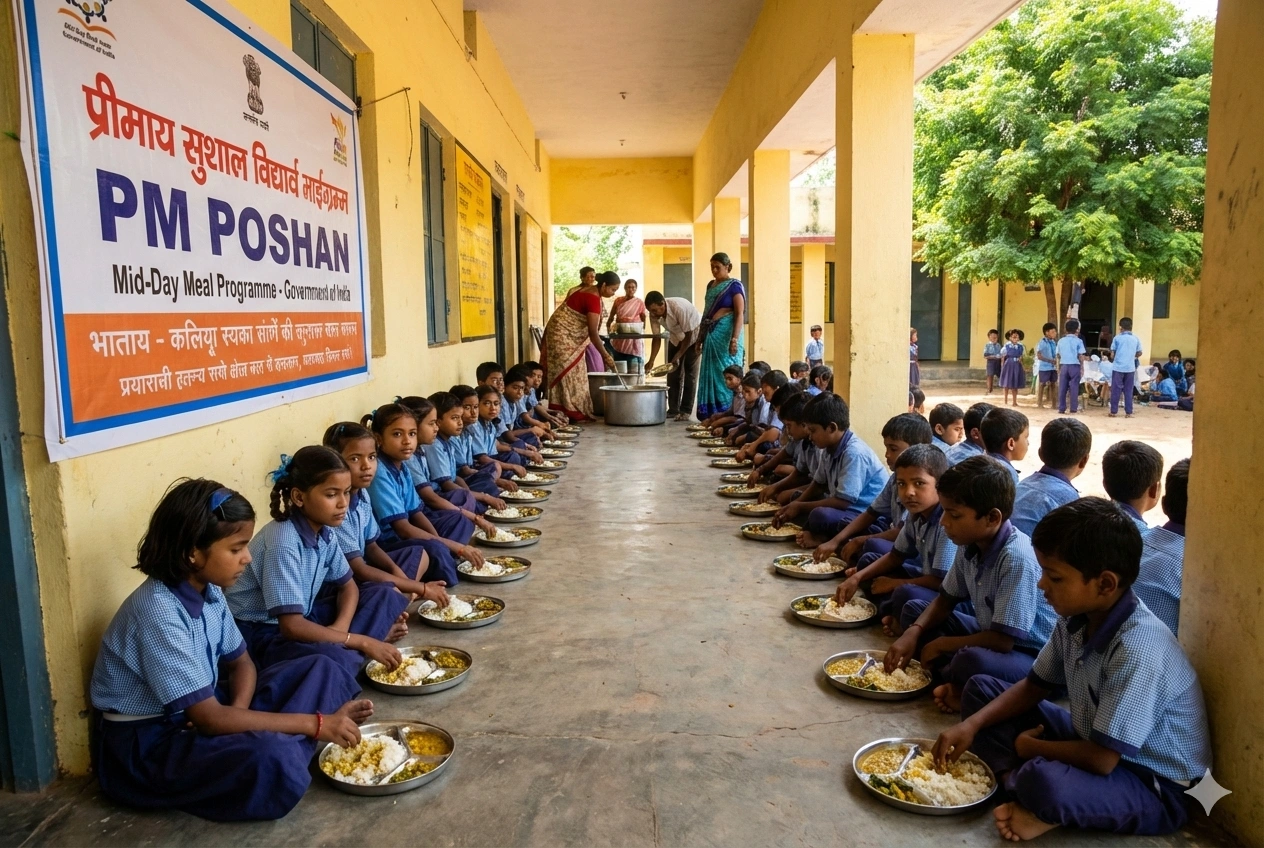
Serving approximately 11.8 crore children across 11.2 lakh schools, this is the world's largest school feeding programme. But why is it so critical for India's development, and what are the specific rules that govern it?
In this guide, we decode the evolution, nutritional rules, and massive impact of the PM POSHAN Abhiyaan, illustrating why it remains the backbone of Indian public education.
From 1995 to PM POSHAN: The Evolution
The concept of school lunches isn't new to India, but it became a national mandate in 1995 with the launch of the National Programme of Nutritional Support to Primary Education (NP-NSPE). The goal was simple yet profound: stop "classroom hunger." Children cannot learn on an empty stomach.
Key Milestone: 2021
In 2021, the scheme was restructured as PM POSHAN (2021–2026). What's new? The new avatar extends coverage beyond primary classes to include pre-primary students (Bal Vatika), recognizing that nutrition is vital for early childhood development (ages 3-5).
Official Guidelines & Nutritional Rules (2025-26)
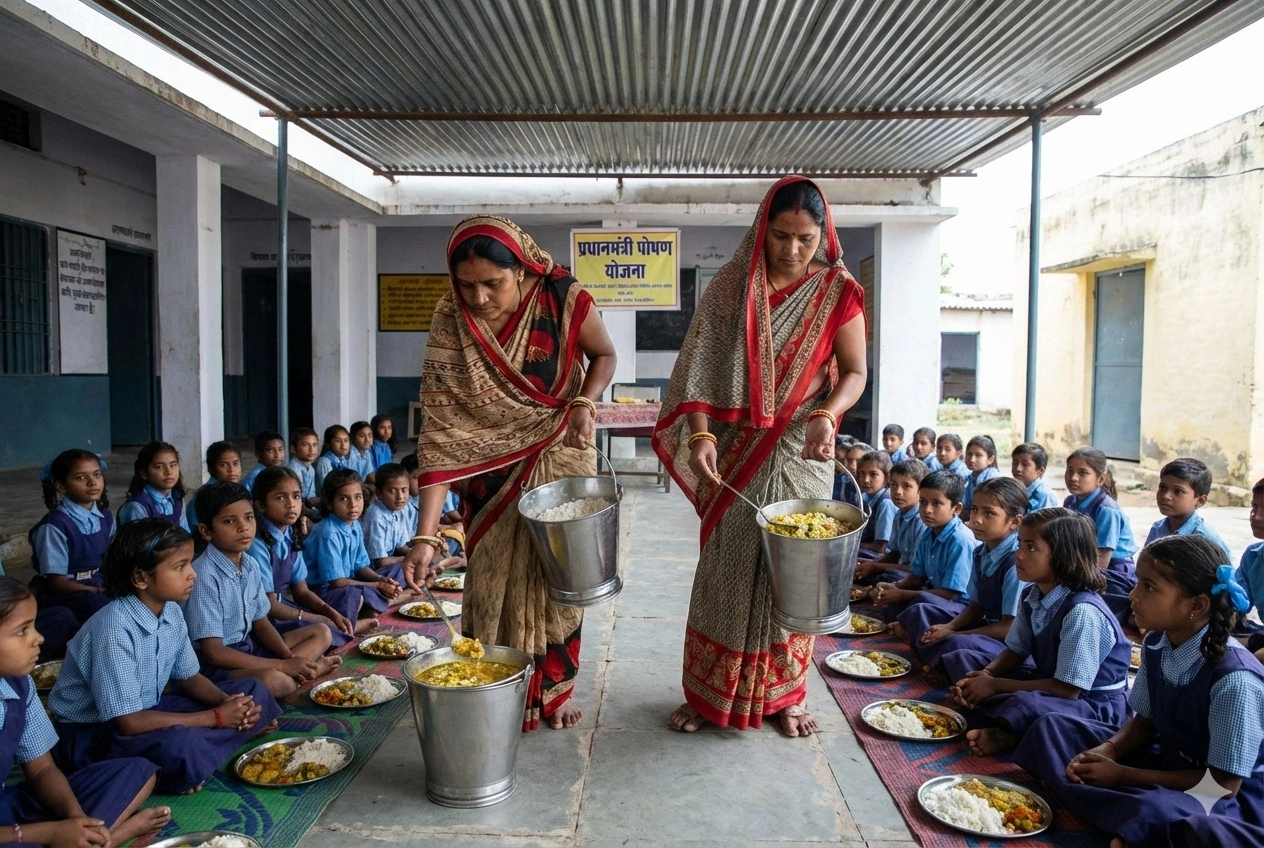
A balanced, nutritious meal following PM POSHAN guidelines
For parents, educators, and policy researchers, understanding the Mid-Day Meal rules is crucial. The scheme is governed by strict norms under the National Food Security Act (NFSA), 2013.
1. Who is Eligible? (Coverage)
- Children in Bal Vatika (Pre-primary) to Class VIII
- Students in Government and Government-aided schools
- Learners in Special Training Centres (STCs), Madrasas, and Maktabs supported by Sarva Shiksha Abhiyan
2. Nutritional Standards: What is on the Plate?
The government mandates specific calorie and protein intake to ensure the meal isn't just filling, but nutritious.
| Component | Primary (Class I-V) | Upper Primary (Class VI-VIII) |
|---|---|---|
| Calories | Minimum 450 | Minimum 700 |
| Protein | 12 grams | 20 grams |
| Vegetables | 50 grams | 75 grams |
| Food Grains | 100 grams | 150 grams |
3. Quality Control & Hygiene Safety
To ensure safety, the guidelines specify:
Mandatory Quality Measures
- AGMARK Quality: Ingredients must meet high-quality standards
- Mandatory Tasting: A team of 2-3 adults (usually from the School Management Committee) must taste the food before it is served to children
- Lab Testing: State Food and Drug Administration officials can randomly collect samples to check for nutritional value and hygiene
4. The "Food Security Allowance" Rule
What happens if the school cannot provide a meal? According to the rules, if the mid-day meal is not provided on a school day due to non-availability of grains or fuel, the State Government must pay a Food Security Allowance (cash + grain cost) to the child by the 15th of the next month. This ensures accountability.
6 Reasons Why PM POSHAN is Critical for India
The importance of the Mid-Day Meal Programme goes far beyond food. It is a multi-sectoral development strategy.
1. Breaking the Cycle of Malnutrition
India faces significant challenges with child stunting and anemia. For many children in rural India, the mid-day meal is their only nutritious meal of the day. By guaranteeing protein and calories, the scheme directly combats undernutrition and physical wasting.
2. Skyrocketing School Enrollment & Attendance
The Magnet Effect
The promise of a hot, cooked meal is a powerful incentive:
- Draws children from marginalized backgrounds into the classroom
- Reduces dropout rates: When parents know their child will be fed, they are less likely to pull them out of school for child labor
3. Fueling Cognitive Development
You cannot teach a hungry child. Hunger causes fatigue and reduces attention span. By addressing "classroom hunger," PM POSHAN ensures children have the energy to focus, learn, and retain information, directly impacting learning outcomes.
4. Social Equity: The "Sahabhoj" Effect
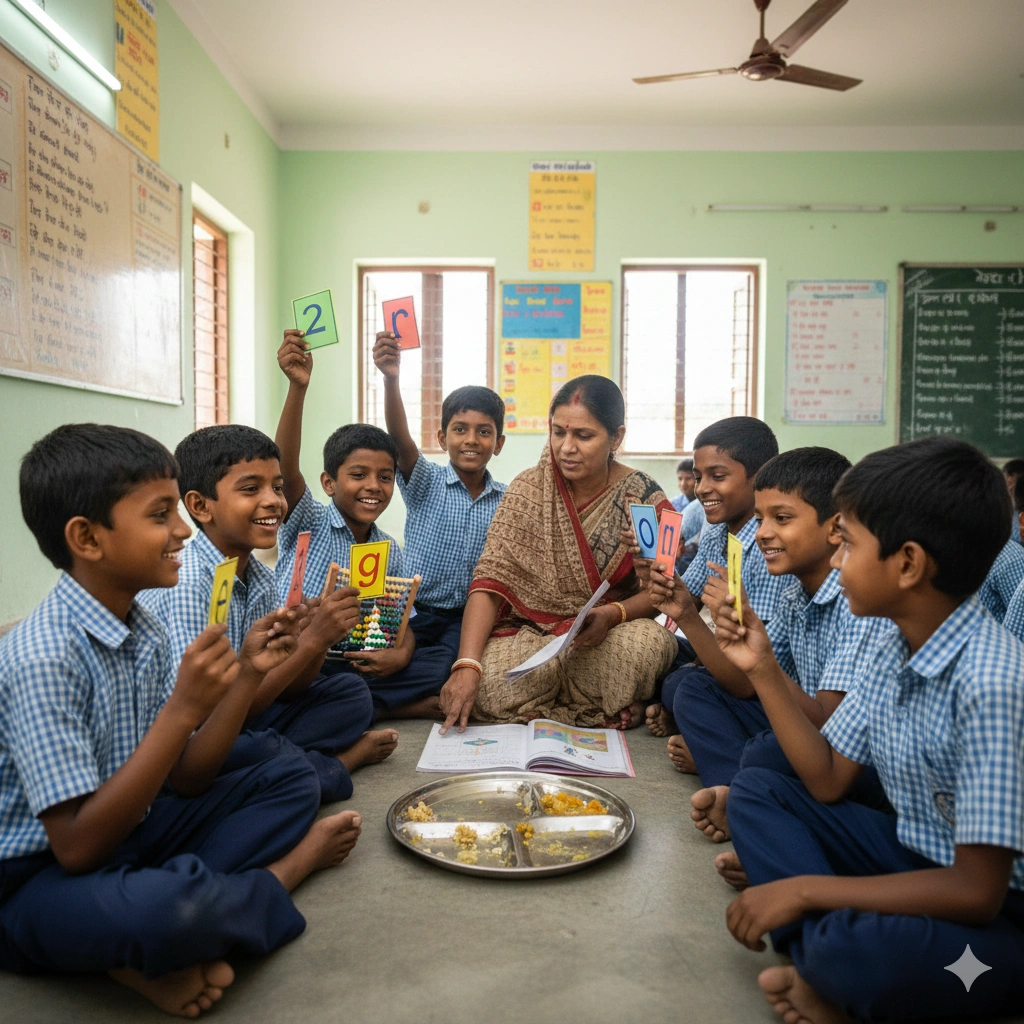
Breaking barriers: Children of all castes sharing a meal together
This is one of the most underrated benefits. In a country stratified by caste, the mid-day meal promotes social cohesion.
Children of all castes sit together and eat the same food (Sahabhoj). Food is often cooked by women from marginalized communities (including SC/ST), helping break untouchability taboos and fostering mutual respect from a young age.
5. Women Empowerment & Local Employment
The scheme generates employment for millions of women who work as cook-cum-helpers. This provides them with economic independence and integrates the community into the school ecosystem.
6. Health & Hygiene Education
It's not just about eating; it's about learning how to eat. Schools enforce handwashing protocols before meals, reinforcing hygiene habits that reduce the spread of diseases.
Challenges & The Road Ahead
While the scheme is a massive success, it faces hurdles like supply chain delays, kitchen infrastructure gaps, and occasional quality consistency issues.
However, innovations are paving the way forward:
Innovative Solutions
- Social Audits: Communities are now monitoring meal quality
- Tithi Bhojan: A community participation program where people sponsor special meals on festivals
- Digital Monitoring: Apps are being used to track real-time data on meals served
Conclusion
The Mid-Day Meal Programme (PM POSHAN) is a testament to India's constitutional spirit—ensuring Education for All and Food Security for All. By feeding 11.8 crore dreams every day, the scheme is nurturing a generation that is healthier, educated, and socially inclusive.
As the programme evolves with better nutritional norms and stricter monitoring, it stands as a global example of how social policy can shape a nation's future—one meal at a time.