From Joint Families to Nuclear Families in India
One of the biggest social changes in India is the move from joint families to nuclear families. Traditionally, grandparents, uncles, aunts, and cousins actively shared parenting responsibilities. Children benefited from collective care, multiple role models, and the wisdom of elders.
In nuclear families, however, the entire responsibility of parenting usually falls on one or two adults. This becomes especially challenging when both parents are working. Without extended family support, parents must handle everything—from childcare and homework to household chores—often leading to stress, fatigue, and a sense of isolation.
Working Mothers in India and the Dual Burden
The rise of working mothers in India is a defining feature of modern parenting. Women are pursuing careers, achieving financial independence, and contributing significantly to household income. While this is empowering, it also creates a dual burden.
Working mothers often juggle:
Professional responsibilities at work
Primary caregiving and household expectations at home
This constant balancing act can lead to guilt, exhaustion, and pressure to “do it all.” Despite changing mindsets, many social expectations still place a disproportionate share of parenting duties on mothers, making their role even more demanding.
At the same time, fathers in urban and semi‑urban India are increasingly involved in childcare and household tasks, which is a positive change. Yet, true co‑parenting—where both parents share duties fairly and consciously—is still evolving.
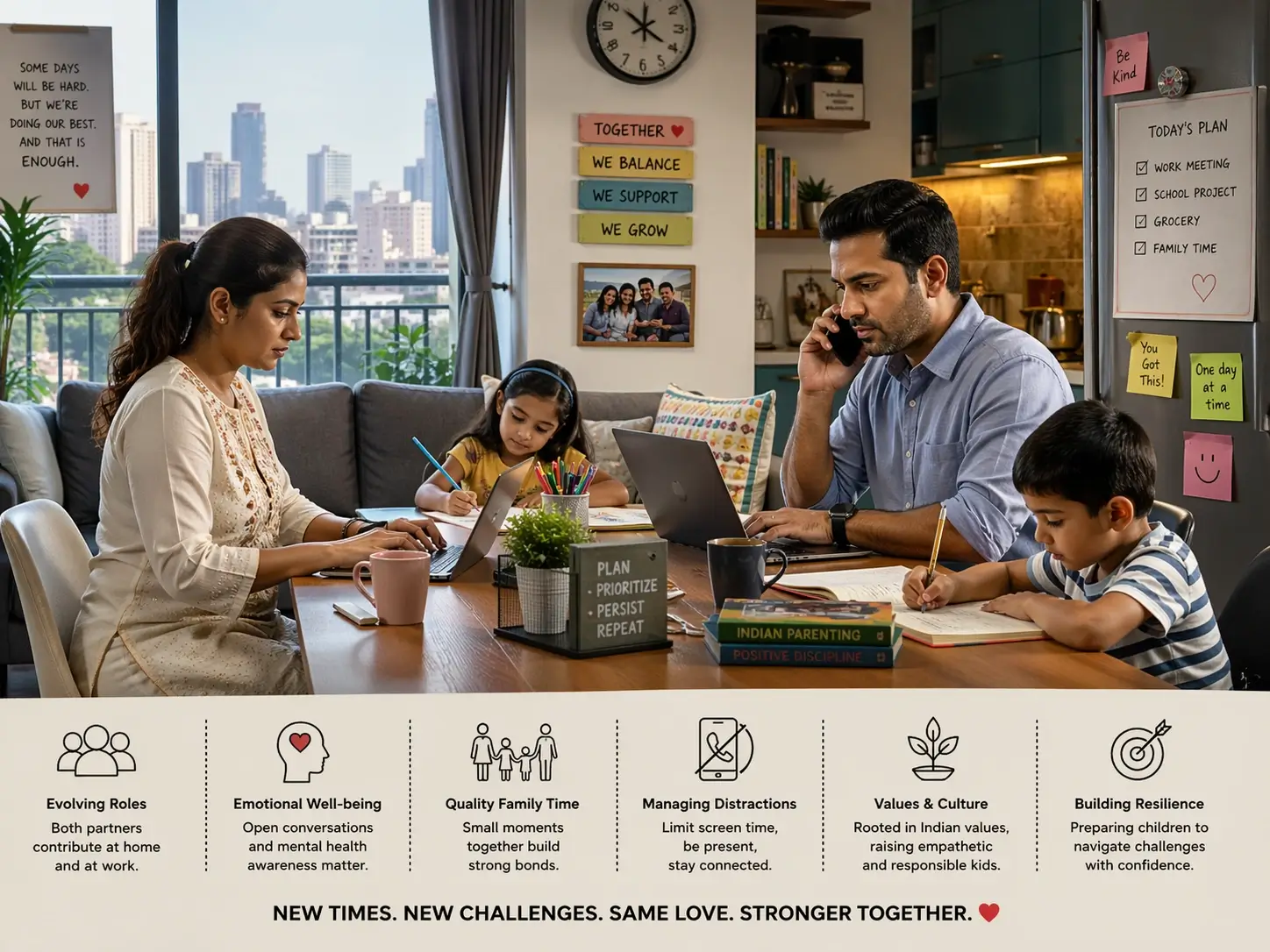
Technology, Screen Time, and Digital Parenting in India
Another major factor shaping contemporary Indian parenting is technology. Children are growing up surrounded by smartphones, tablets, online classes, gaming, and social media. While these tools can support learning and exposure, they also bring risks.
Screen Addiction
Over-reliance on devices for entertainment.
Harmful Content
Exposure to inappropriate online material.
Reduced Activity
Less physical play and compromised sleep.
Parents struggle to find the right balance between using technology for education and entertainment and protecting children from overuse. Unlike earlier generations, digital parenting in India requires constant monitoring, setting screen‑time limits, and guiding children’s online behavior—all of which add another layer of responsibility.
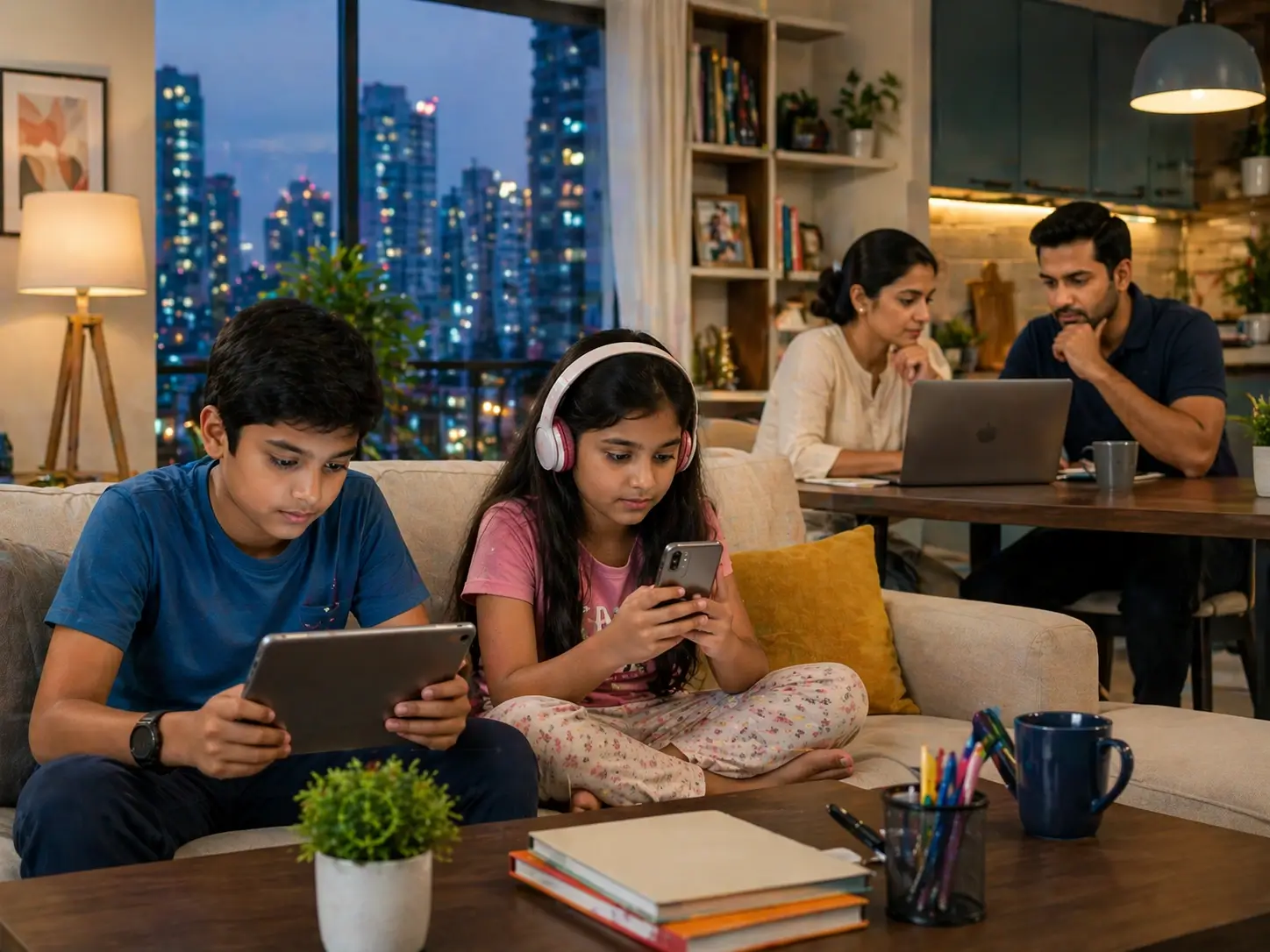
Academic Pressure and Over‑Scheduling Children
Education has become more competitive and demanding across India. Parents often feel strong pressure to ensure their children perform well academically and secure a “bright future.”
This pressure often leads to:
- Over‑scheduling with multiple tuition classes
- Exhausting routines of extracurricular activities
- Constant comparison and performance evaluation
Although the intention is to provide the best opportunities, this can create stress for both parents and children. Modern parenting in India requires a careful balance between encouraging achievement and safeguarding a child’s mental and emotional well‑being.
Urban Lifestyles, Limited Play, and Social Skills
In many Indian cities, urban lifestyles have reduced opportunities for outdoor play and free social interaction. Safety concerns, lack of open spaces, long commutes, and packed routines often keep children indoors.
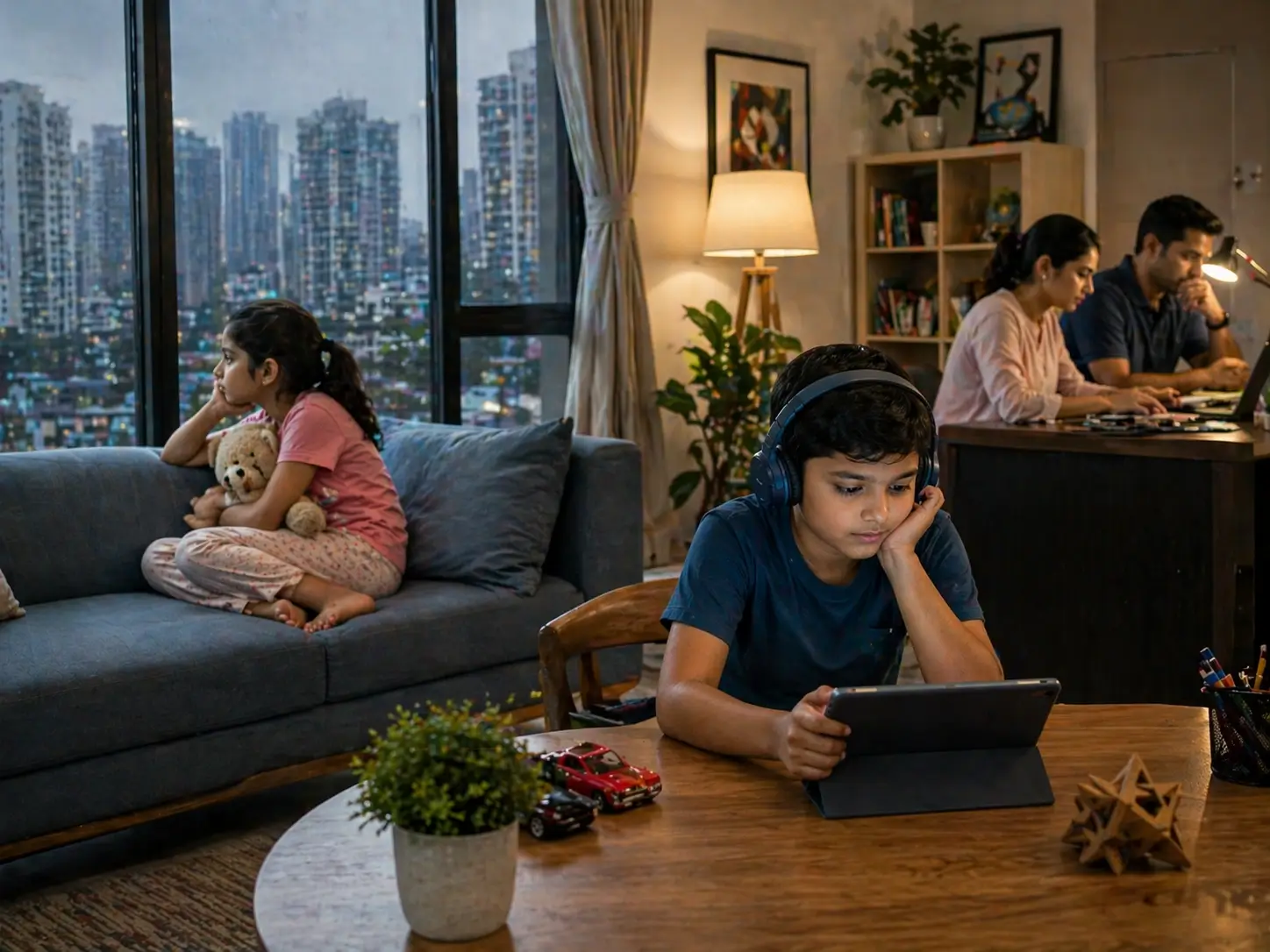
As a result, parents must make extra effort to create time for outdoor activities, encourage unstructured play, and provide chances for children to interact with peers offline. This is especially difficult in crowded cities where both space and time are limited, but it remains essential for healthy physical, social, and emotional development.
Emotional Well-Being of Children (and Parents)
Children today face pressures very different from previous generations, including academic competition, peer influence, and the impact of social media image.
Parents must be sensitive to their children’s emotional needs, offering support, empathy, and open communication. At the same time, they must manage their own stress from work, finances, and personal responsibilities. This makes it challenging to remain emotionally present and patient.
Positive Shifts: Gentle Parenting, Awareness, and Resources
Despite the challenges, modern Indian parenting also brings positive shifts. Many parents are becoming more aware of gentle parenting, child psychology, and the importance of emotional safety.
Trusting Bonds
Building strong, trusting relationships over strict authority.
Empathy
Using explanation rather than fear and punishment.
Independence
Encouraging independence while maintaining boundaries.
Access to information has also improved. Parents can now turn to books, online articles, webinars, and experts for guidance. Parenting groups provide support, reassurance, and a space to share experiences.
Practical Mindset: Balance, Flexibility, and Self‑Care
To navigate the complexities of parenting in the modern world, Indian parents need a balanced and flexible mindset.
Time ManagementPrioritizing tasks to reduce daily chaos.
Shared ResponsibilitiesSharing tasks between partners and accepting perfection is impossible.
Self-CarePracticing self‑care so parents don’t burn out.

Equally important is making space for quality time with children. Even small, consistent moments—like family meals, bedtime stories, short walks, or simple conversations—strengthen bonds and give children a sense of security.
Conclusion: Redefining Parenting in Contemporary Indian Families
Being a parent in today’s world is undeniably challenging. The shift from joint to nuclear families, the rise of working mothers, the deep influence of technology, and increasing academic demands have all made parenting more demanding than ever.
Yet, with awareness, flexibility, shared responsibility, and a compassionate approach, these challenges can be managed. Modern parenting in India is not about being flawless; it is about striving to create a nurturing, balanced, and loving environment where children feel safe, valued, and understood.