Education Is Not Just Memorization: Nurturing Minds and Well-Being
Why Holistic Learning Matters More Than Ever
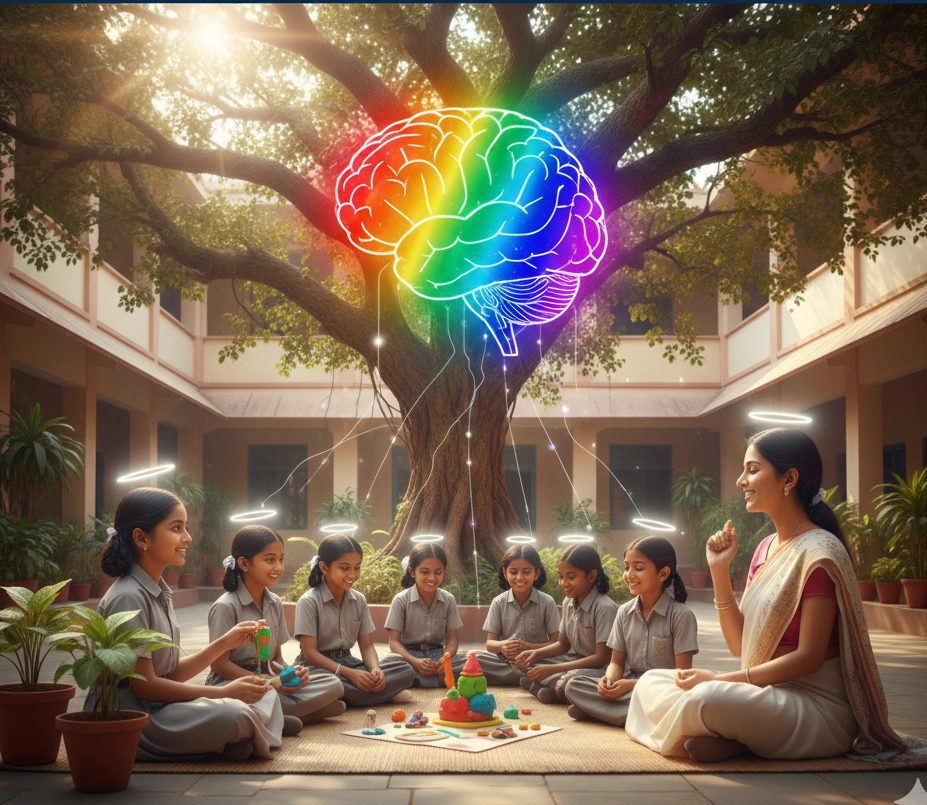
At the same time, India is facing a silent mental health crisis among students. The numbers are alarming and demand immediate attention from educators, parents, and policymakers.
The Alarming Data: Student Mental Health in India
According to the National Crime Records Bureau (NCRB), student suicides rose by nearly 65% over the last decade, from 8,423 in 2013 to 13,892 in 2023, making up about 8.1% of all suicides in the country.
These numbers make it clear: education that focuses only on marks and memory is not just incomplete—it is dangerous.
Gandhi's Vision: Body, Mind, and Spirit
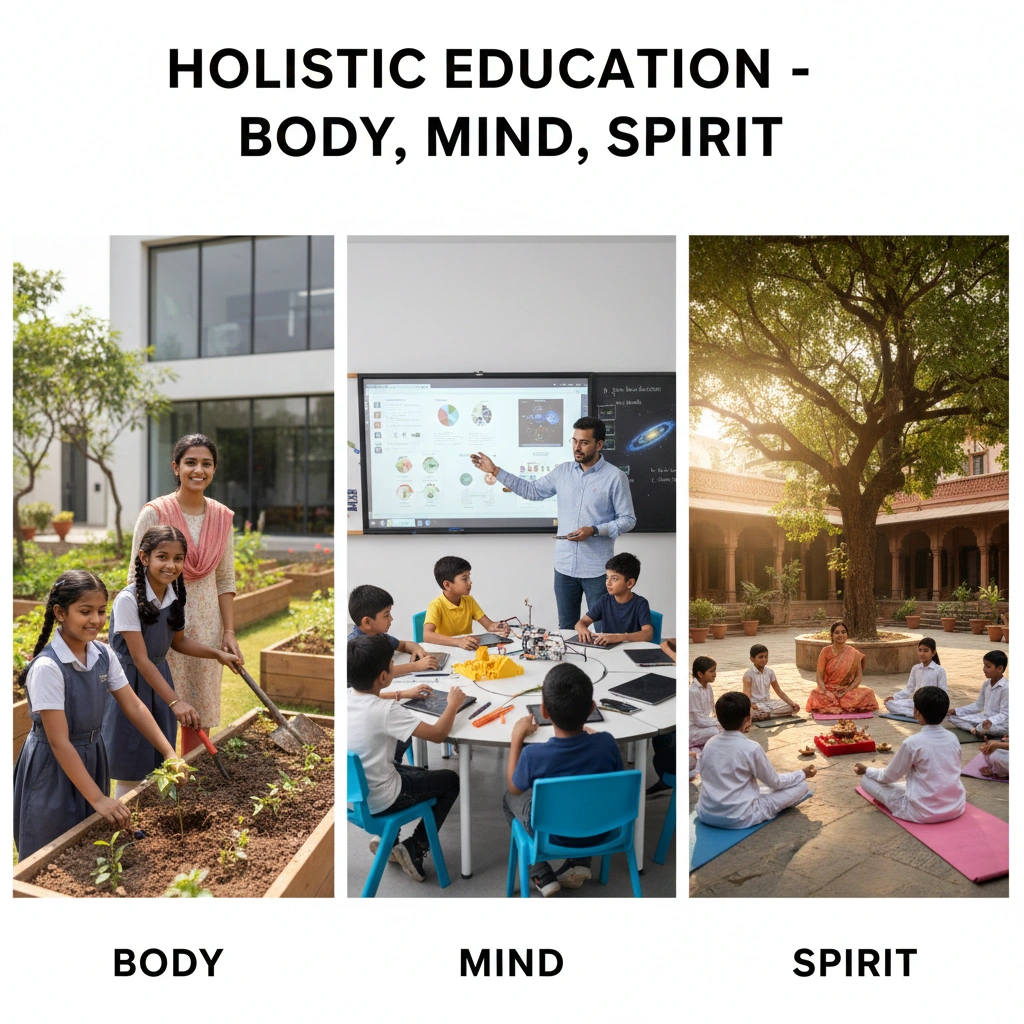
Gandhi's timeless vision: Education as development of the whole person
Mahatma Gandhi famously defined education as:
"An all-round drawing out of the best in child and man—body, mind, and spirit."
— Mahatma GandhiThis is the opposite of a system that judges children primarily by their report cards. For Gandhi, a truly educated person can think independently, act ethically, and contribute meaningfully to society, not merely recite learned answers.
When schools and families measure success only through ranks, percentages, and cut-offs, children internalize the belief that their worth equals their marks. This fuels:
- Fear of failure and constant comparison
- Chronic stress and pressure to perform
- Erosion of self-confidence and creativity
- For vulnerable students: anxiety, depression, and thoughts of self-harm
The Cost of Exam-Centric Education in India
The impact of this exam-obsessed culture is now visible in hard data. Between 2013 and 2023, India lost 1,17,849 students to suicide, with the annual number touching a record 13,892 in 2023 alone. At the same time, surveys show that exam pressure is one of the biggest sources of anxiety for adolescents in Classes 9–12.
Major Risk Factors Identified
- Academic pressure and fear of failure
- Family expectations and societal comparisons
- Relentless competition starting from early years
- Lack of emotional support and coping mechanisms
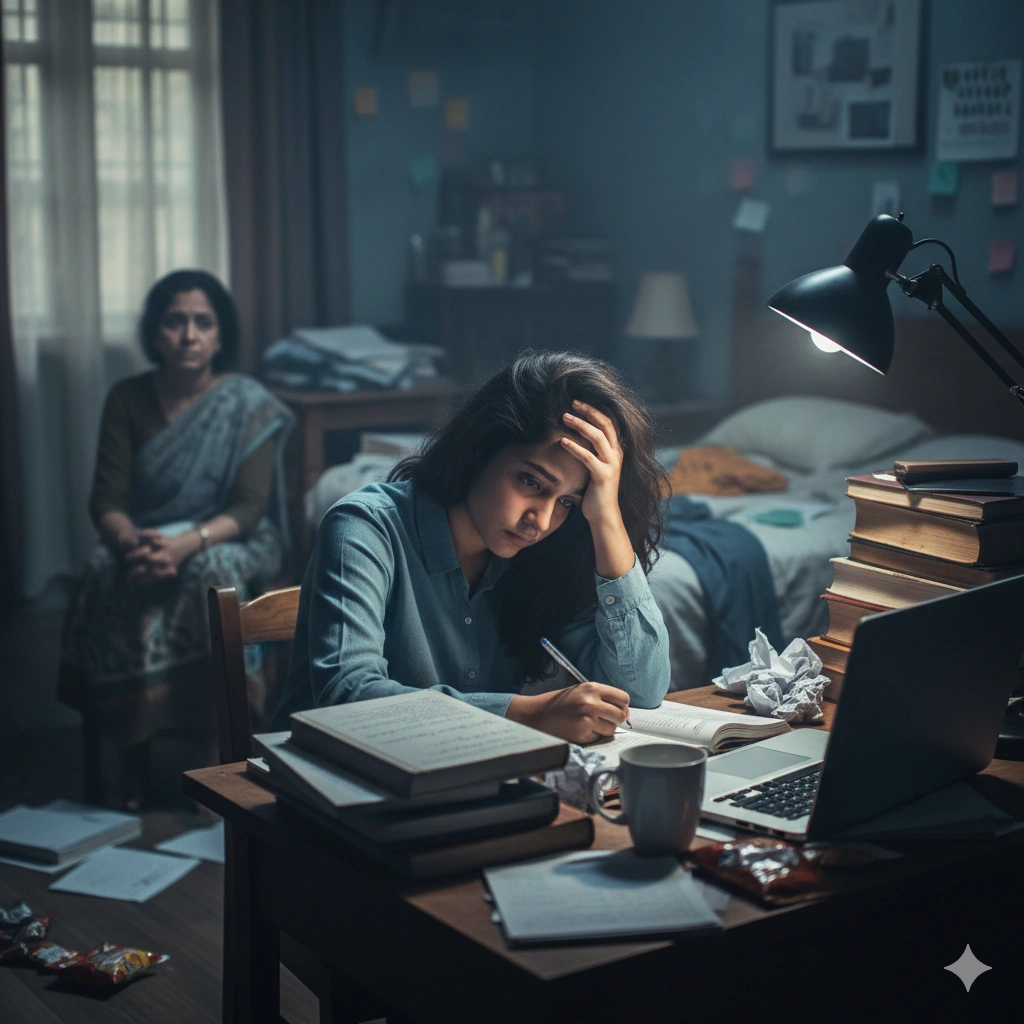
The silent burden: Exam pressure taking a toll on young minds across India
When education is reduced to memorization and high-stakes exams, there is little space left for:
- Life skills like communication, decision-making, and problem-solving
- Emotional resilience and healthy coping strategies
- Exploration of interests, talents, and values
The result is a generation that may score well on tests but struggles with self-worth, relationships, and real-world challenges.
Vivekananda: Education as Manifestation of Inner Strength
Swami Vivekananda described education as:
"The manifestation of the perfection already in man."
— Swami VivekanandaThis powerful idea shifts the focus from filling children with information to drawing out their inherent potential. Education, in his view, must:
Vivekananda's Core Principles
- Build moral strength and character
- Develop self-confidence and courage
- Encourage questioning, reflection, and independent thinking
When classrooms encourage students to explore, ask "why," discuss real problems, and create solutions, learning becomes a source of joy instead of fear. Such an approach naturally reduces anxiety and builds a sense of competence, because children feel they are growing—not just performing.
NEP 2020: From Rote Learning to Holistic Education
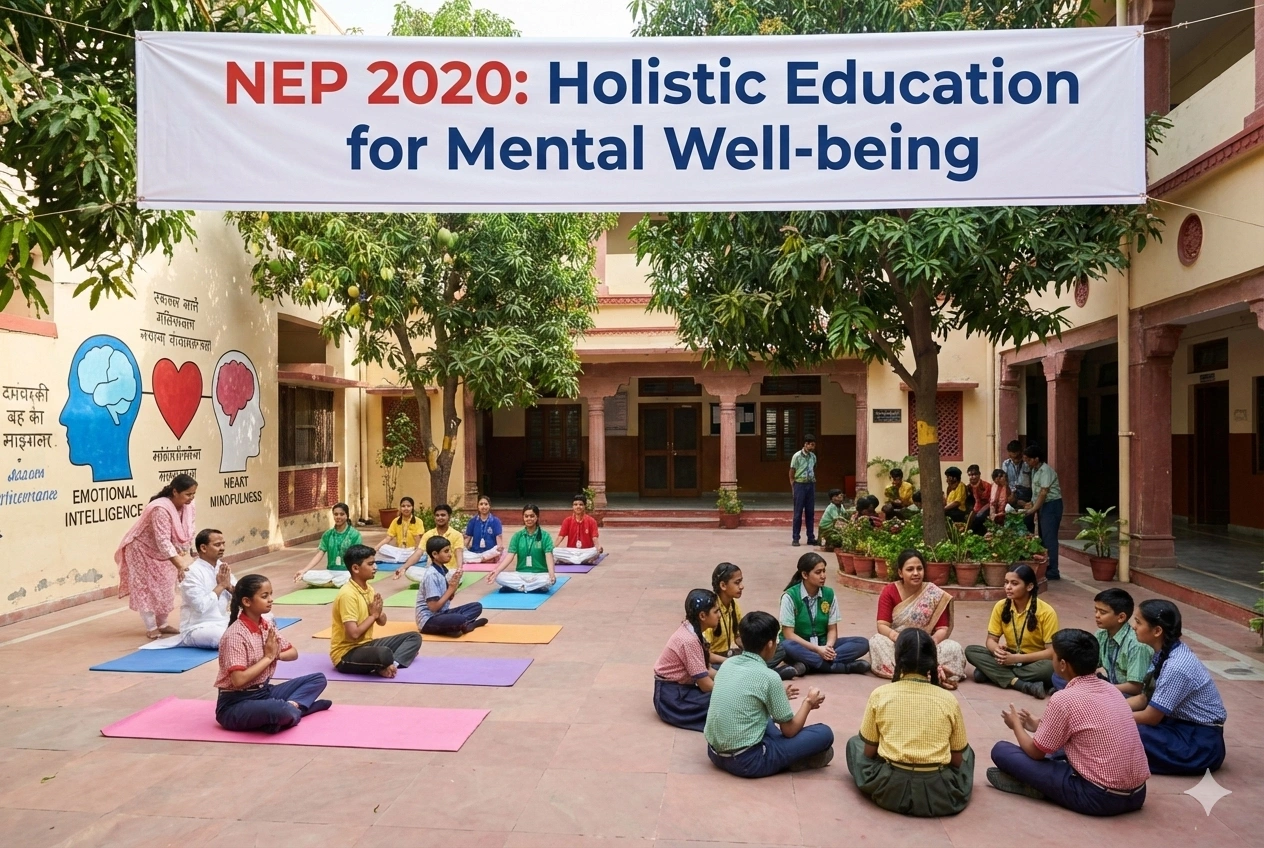
NEP 2020: A transformative policy shift toward whole-child development
Recognizing these challenges, India's National Education Policy (NEP) 2020 calls for a major shift from rote memorization to holistic, competency-based education.
NEP 2020 Key Priorities
- Critical thinking and problem-solving rather than mechanical recall
- Experiential, activity-based, and inquiry-based learning across subjects
- Multidisciplinary education, allowing integration of arts, sports, and vocational skills
- Social-emotional learning (SEL), empathy, and life skills as core components of schooling
The policy also recognizes the centrality of mental health and well-being. It recommends:
- A holistic progress card that reflects cognitive, emotional, and psychomotor development, not just exam scores
- Integration of health, mental health awareness, yoga, mindfulness, and physical education into the curriculum
- Strengthening counselling systems and supportive school environments so students can thrive psychologically as well as academically
The Bottom Line
NEP 2020 officially acknowledges what many parents and educators already feel: education must care for the whole child—mind, body, and heart.
Beyond Memory: Role of Well-Being, Play, and Creativity
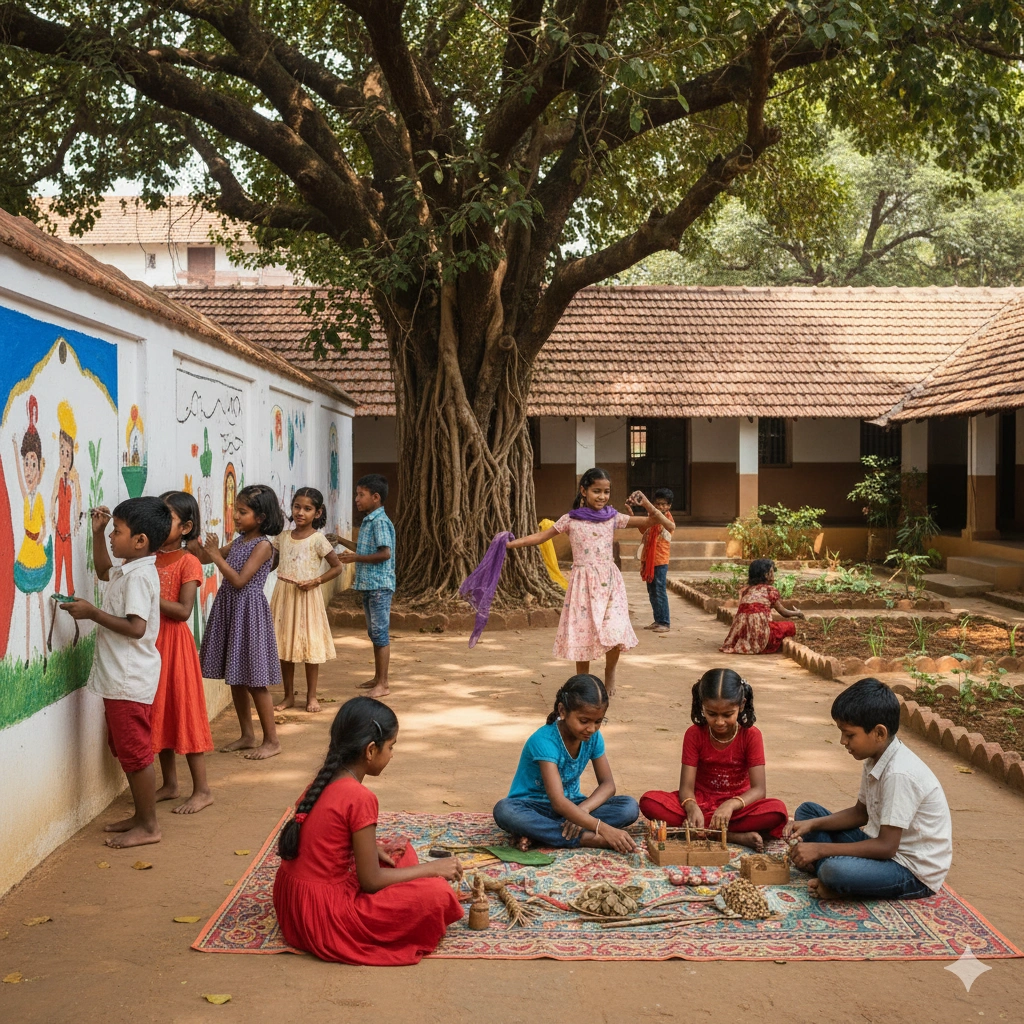
Play, creativity, and movement: Essential pillars of healthy child development
Physical health, emotional intelligence, and creativity are deeply interconnected. Yet a memorization-heavy timetable often sidelines:
- Sports and outdoor play
- Arts, music, theatre, and craft
- Reflection, conversation, and rest
NEP 2020 explicitly encourages regular sports, yoga, arts, and meditation as integral parts of schooling—not "extra" activities. Research shows that such practices:
Benefits of Holistic Activities
- Reduce stress and anxiety levels significantly
- Improve focus, memory, and problem-solving abilities
- Support emotional regulation and social bonding
When students get to move, create, and express themselves, they are better prepared to handle academic challenges without being crushed by them.
Putting Mental Health at the Centre of Education
If education is to truly "nurture minds and well-being," emotional support cannot be optional. Schools and families can work together to:
Building Mental Health Support Systems
- Provide access to trained counsellors and safe spaces to talk
- Run regular sessions on exam stress management, study skills, and digital balance
- Encourage peer-support systems and teacher mentoring
- Normalize asking for help instead of hiding fear or shame
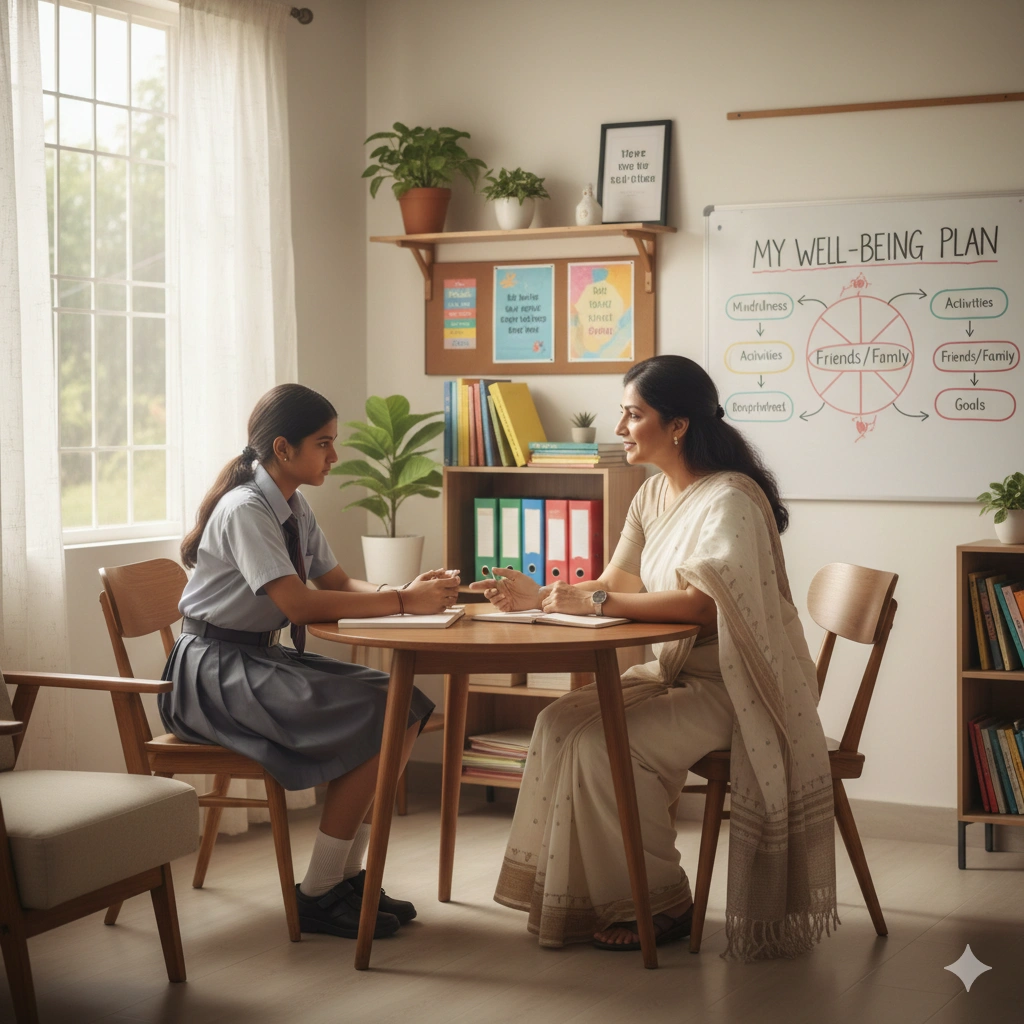
Creating safe spaces: The vital role of counseling in schools
NEP 2020 supports such measures by explicitly highlighting mental health, life skills, and psychosocial well-being as essential parts of school education. When children feel seen, heard, and supported, they are far more likely to flourish—academically, socially, and personally.
What Parents and Schools Can Do Differently
To move beyond "marks = education," parents and educators can start with small but powerful shifts:
Practical Steps for Parents & Teachers
- Praise effort and learning, not just scores and ranks
- Ask children what they understood, created, or felt—not only "How many marks did you get?"
- Use projects, discussions, and real-life examples to teach concepts instead of only dictation and notes
- Allow reasonable time for sleep, play, hobbies, and family conversations
- Watch for signs of stress—sleep issues, withdrawal, sudden anger, or loss of interest—and seek timely help
These steps send a clear message: Your worth is not equal to your marks; your health and values matter more.
Conclusion: Educating the Whole Child, Not Just the Memory
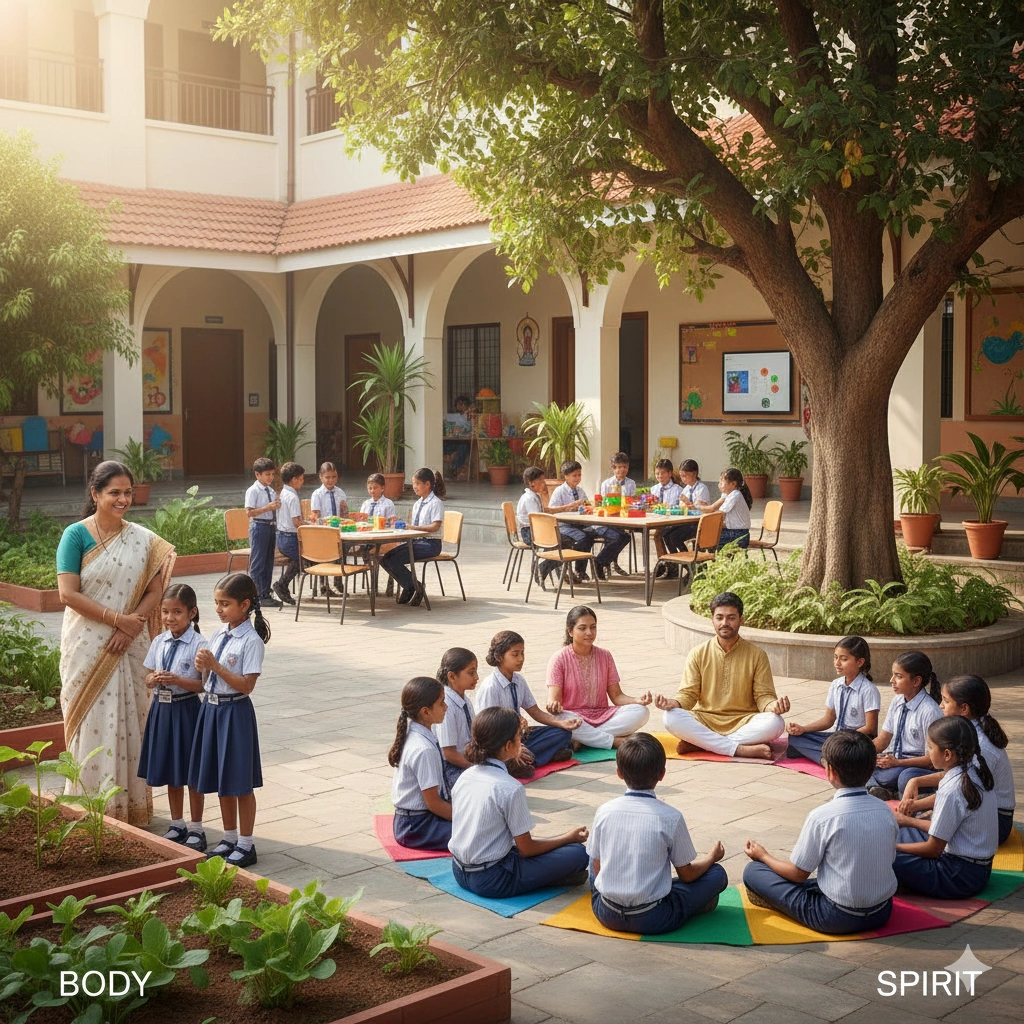
The future of education: Nurturing the whole child—mind, body, and heart
Education is not about stuffing the brain with information—it is about nurturing minds, strengthening character, and protecting emotional and physical well-being. The alarming rise in exam stress, anxiety, and student suicides is a wake-up call to move away from narrow, exam-centric pedagogy.
By embracing the holistic vision of Gandhi and Vivekananda, implementing the child-centered, experiential approach of NEP 2020, and prioritizing mental health alongside academic learning, India can build an education system that truly serves its children.
When schools and homes work together to cultivate curiosity, critical thinking, resilience, and empathy, students do not just survive the system—they thrive, and the nation moves closer to its fullest human potential.
Let's Choose Well-Being Over Marks
Every child deserves an education that nurtures their mind, respects their emotions, and celebrates their uniqueness. The time to act is now.